Crops we work with
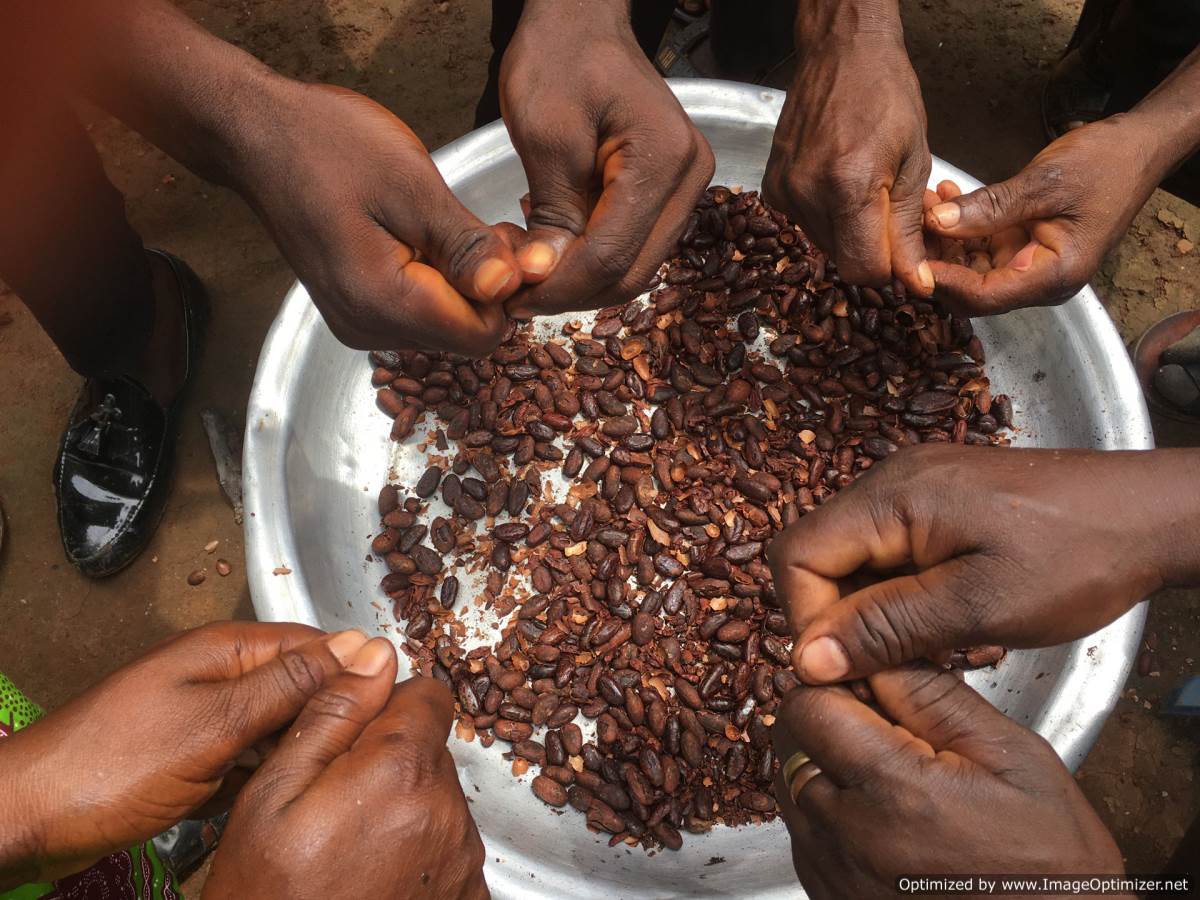
Theobroma cacao
Regenerating cocoa landscapes with Dynamic Agroforestry — healthier soils, higher yields, and income from the very first year.

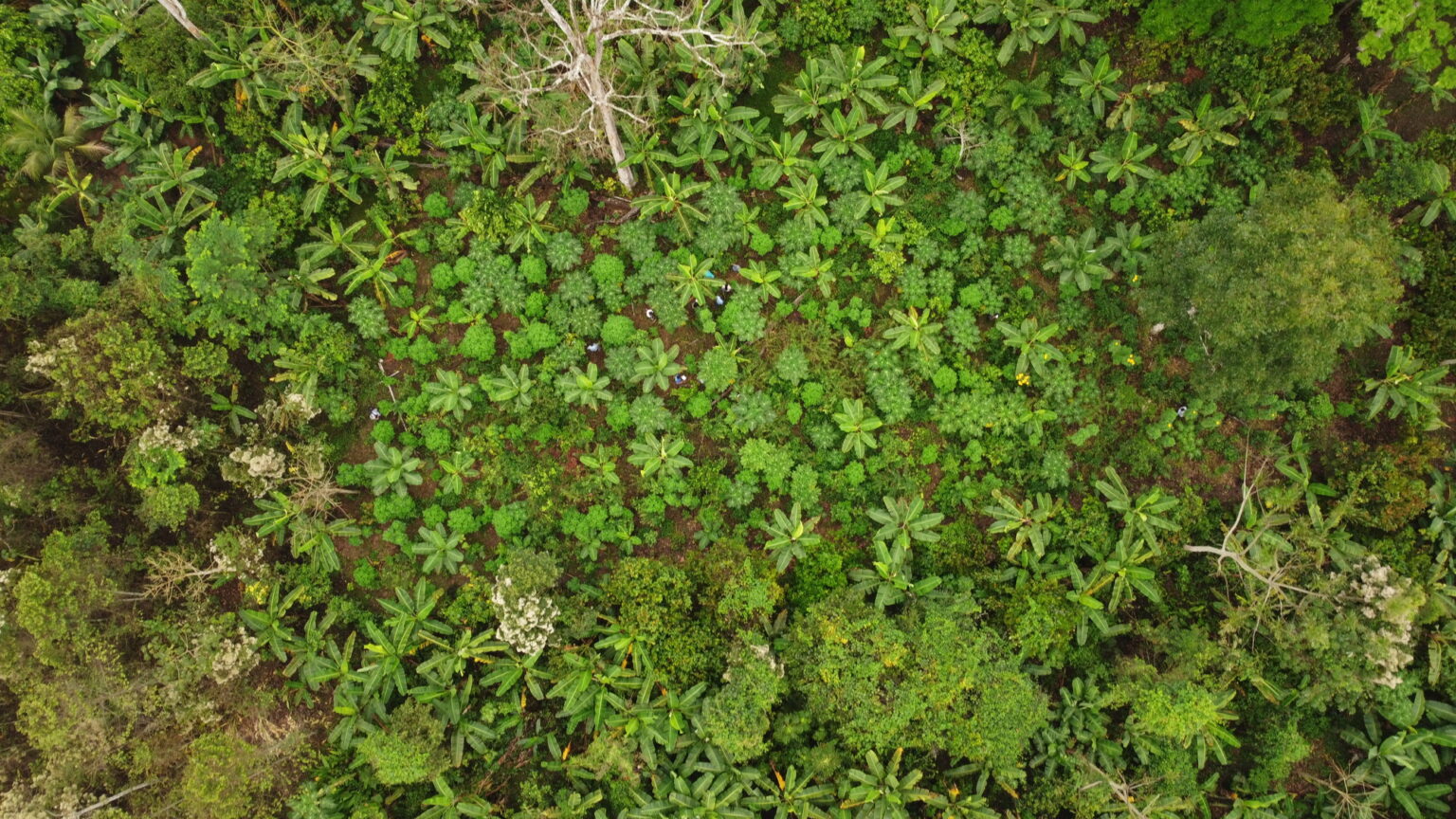
Cocoa is one of ECOTOP’s core crops. For more than two decades we have worked with cocoa farmers across the tropics to move away from full-sun monocultures toward diverse, multi-layered agroforestry systems.
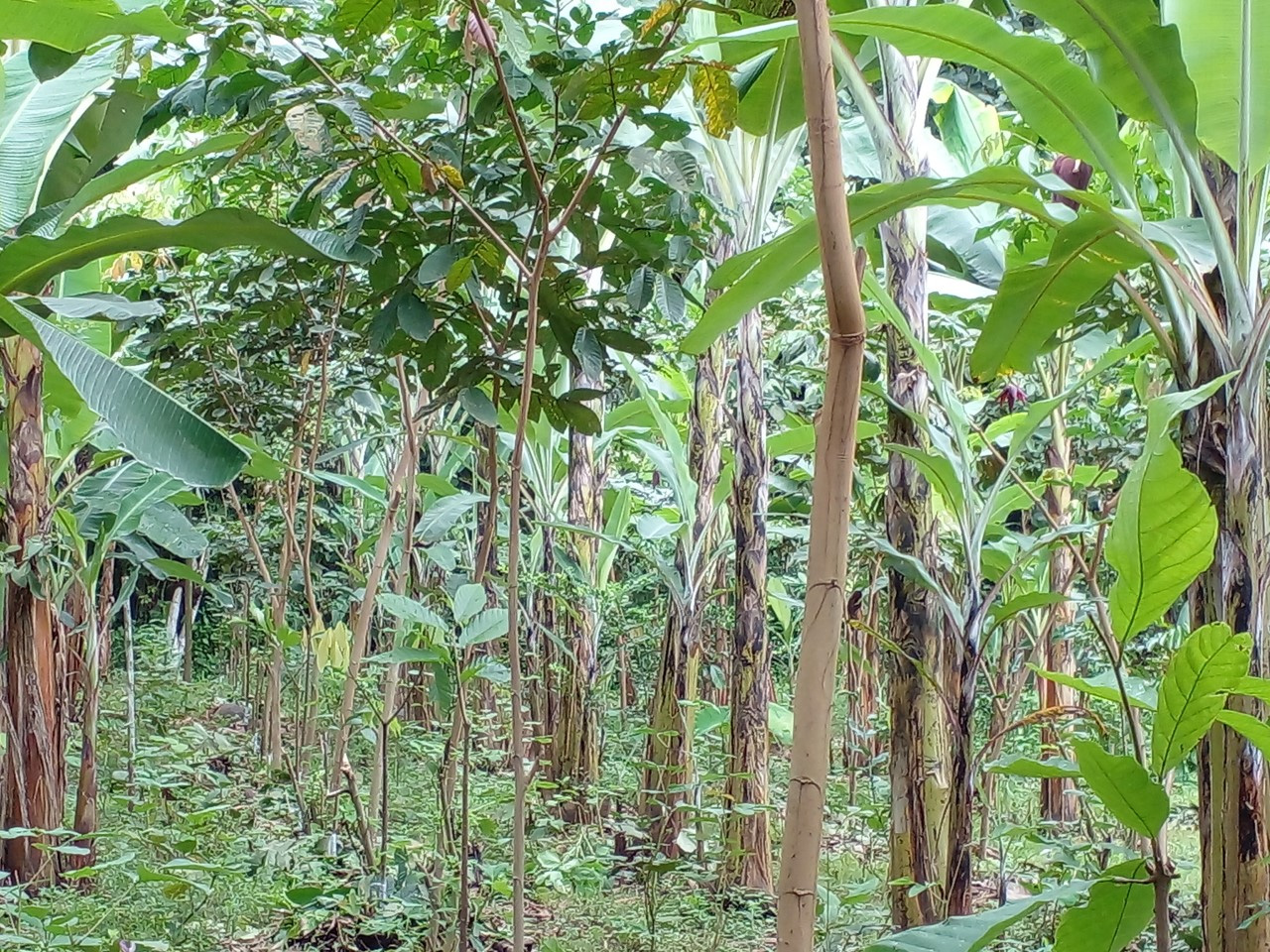
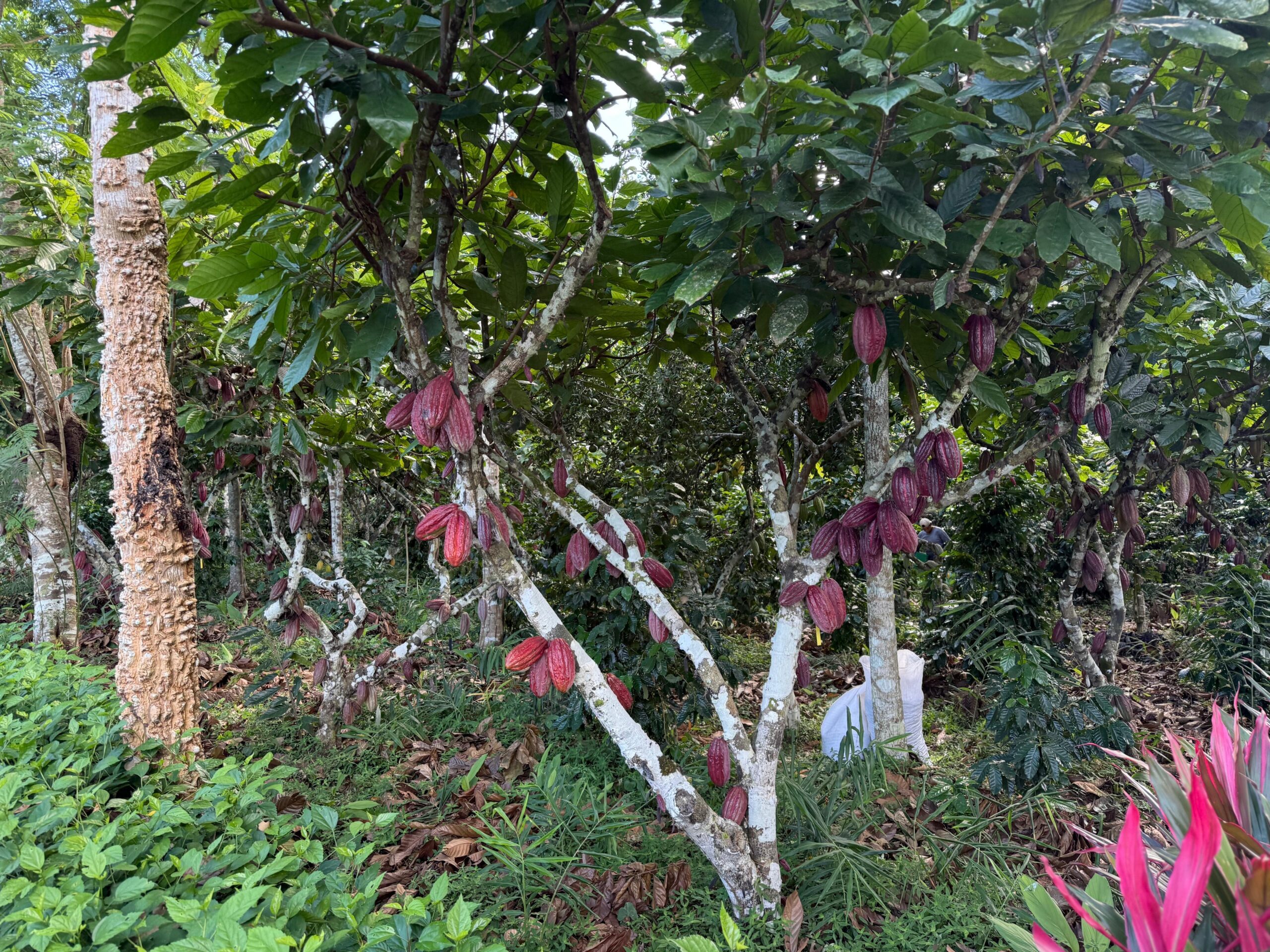
By combining cocoa with shade trees, fruit species and nitrogen-fixing plants, our Dynamic Agroforestry approach rebuilds soil fertility, suppresses pests and disease, and improves yields — without reliance on external inputs. Fast-growing pioneer species generate income from the very first year, while the cocoa matures.
Evidence
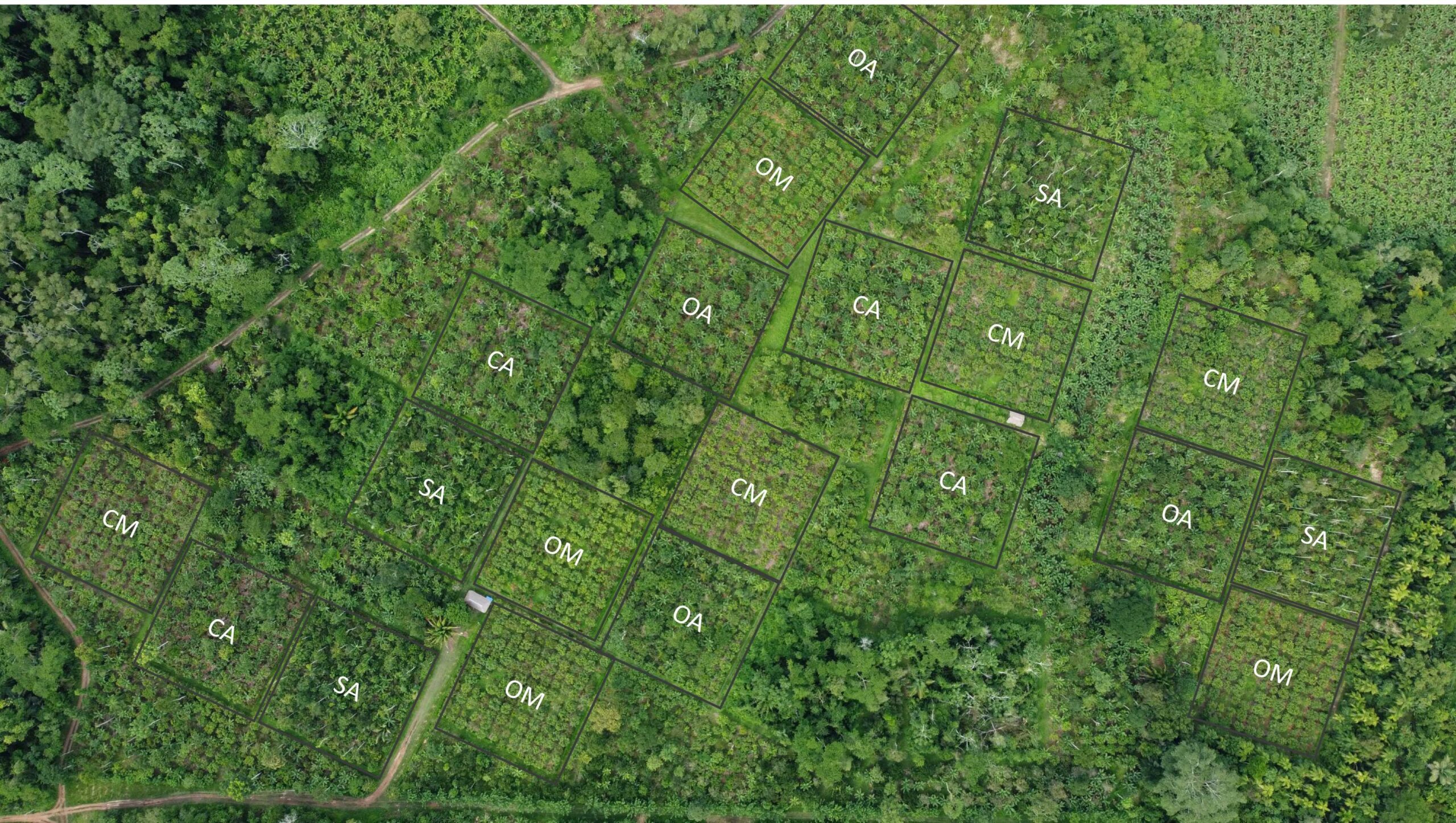
The longest-running comparison of cocoa systems in the tropics is the SysCom trial at Sara Ana, Bolivia, run with FiBL for more than fifteen years: the same soil and the same cultivars, side by side. This is what it shows.
Cocoa yield in the DAF plots, with no synthetic fertiliser or pesticide: roughly twice the global average of around 450 kg/ha.
SysCom Bolivia long-term trial, FiBL / ECOTOP
More biomass carbon than a cocoa monoculture after 14 years on the same soil: 66 t C/ha against 26.
Krause et al. 2025, Agriculture, Ecosystems & Environment
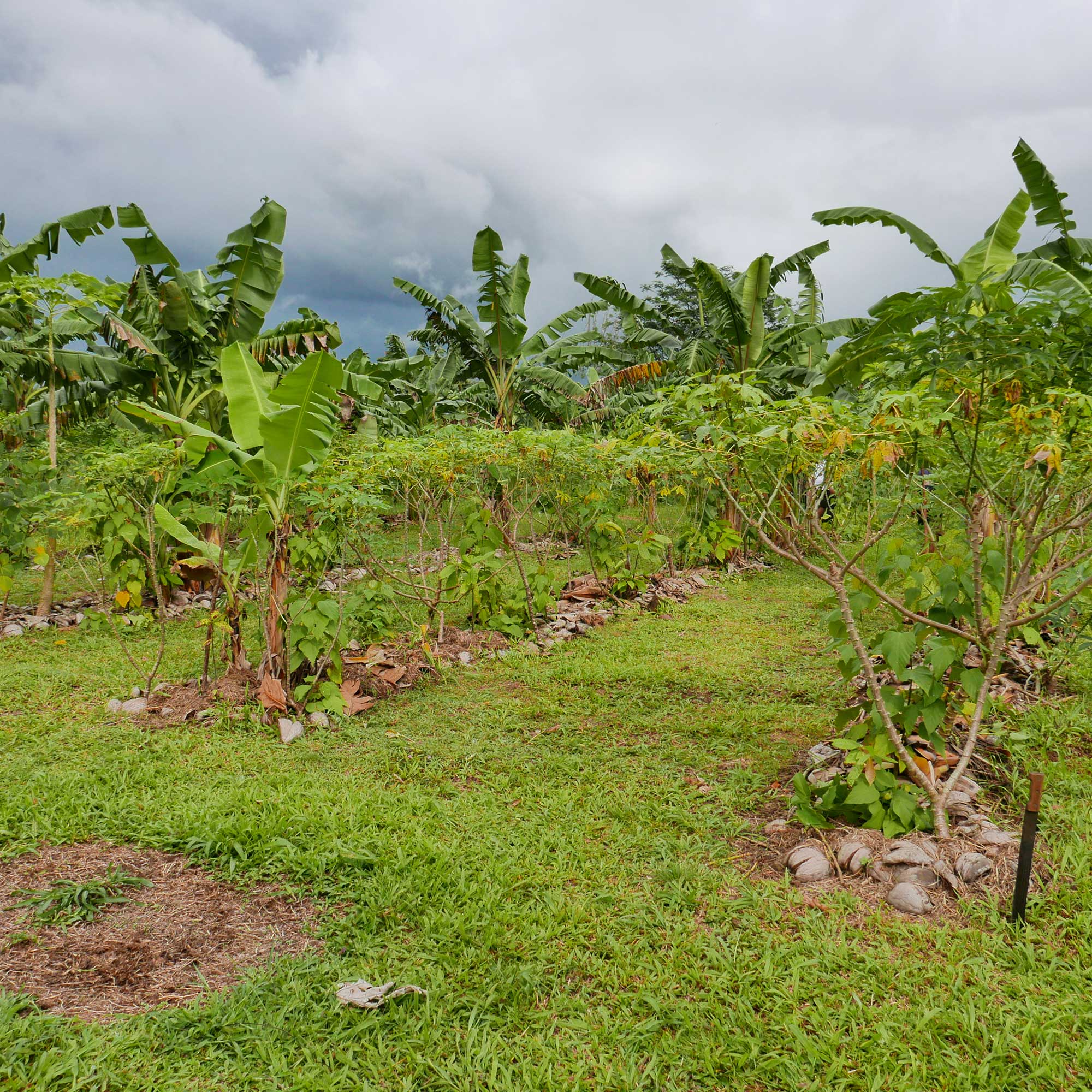
Income before the cocoa produces, from cassava, banana, plantain, ginger and turmeric planted with it. In the establishment years, several times the income of a monoculture.
SysCom Bolivia long-term trial, FiBL / ECOTOP
Peak daytime temperature under the DAF canopy compared with a cocoa monoculture, and about ten times less rain lost to runoff.
Niether et al. 2018; Fuchs et al. 2021
The Cocoa Research Institute of Ghana (CRIG) runs an independent trial at New Tafo, set up under the Sankofa project, comparing DAF with conventional cocoa on low-fertility soils. So far the DAF plots show more pods, fewer lost seedlings and less pest damage than the conventional plots. The results are being prepared for publication.
The difference
Continuous organic matter and deep-rooting trees restore depleted cocoa soils and improve water retention.
Diversified canopies improve cocoa yields while easing pest, disease and climate stress.
Fast-growing pioneer and companion species deliver harvests and revenue from the first year, while cocoa matures.
High tree density sequesters significant CO2 and rebuilds habitat, supporting insetting and certification.
Dynamic Agroforestry doesn’t ask farmers to wait. Fast-growing pioneer and companion species — bananas, cassava and short-cycle crops — deliver harvests and revenue while the cocoa establishes.
As the system matures, the same diversity that pays early keeps paying: steadier yields, lower input costs, and cocoa that is more resilient to a changing climate.

Our approach
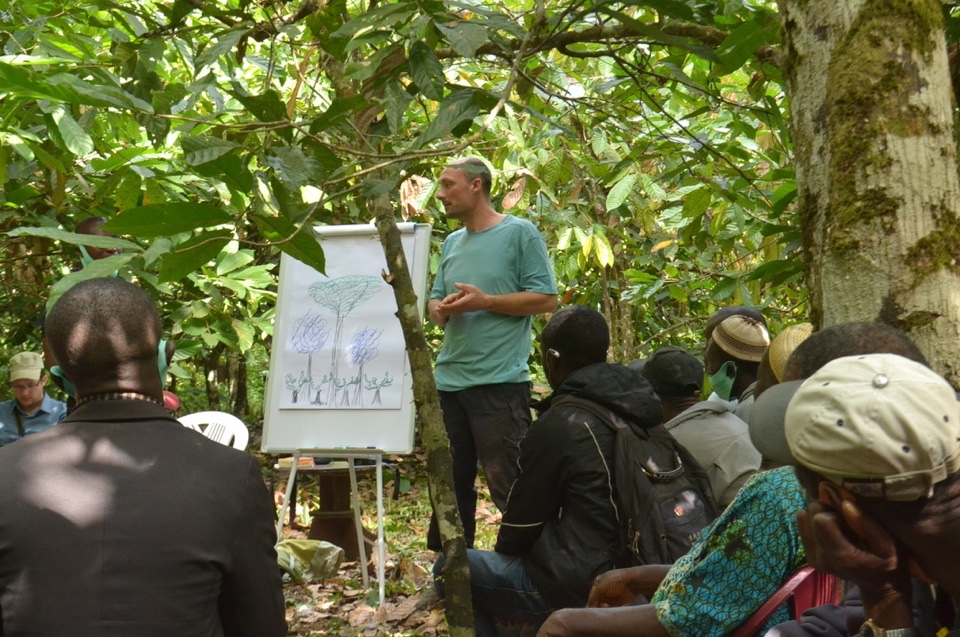
A tailored programme with you — from first assessment to landscape transformation — building the local capacity to run and scale it.
Projects
Resources
 Article · 6 min
A 14-year Bolivia trial shows DAF cocoa can store more than double the biomass carbon of monocultures.
 Article · 8 min
How Dynamic Agroforestry tackles deforestation, soil degradation, pests and climate risk in cocoa.
 Article · 6 min
Why diverse, multi-crop systems out-yield single-crop cocoa — with a higher return on labour.
Our services
From first assessment to handover to a local team.
Learn more →Trainers who farm DAF themselves, with follow-up on the plot until soils and yields show it.
Learn more →Carbon measured in the field, certification-ready.
Learn more →Field data, plot maps and dashboards. EUDR on the same data.
Learn more →Two long-term trials, peer-reviewed results.
Learn more →Find out how ECOTOP can strengthen your cocoa production with Dynamic Agroforestry.
Contact our team