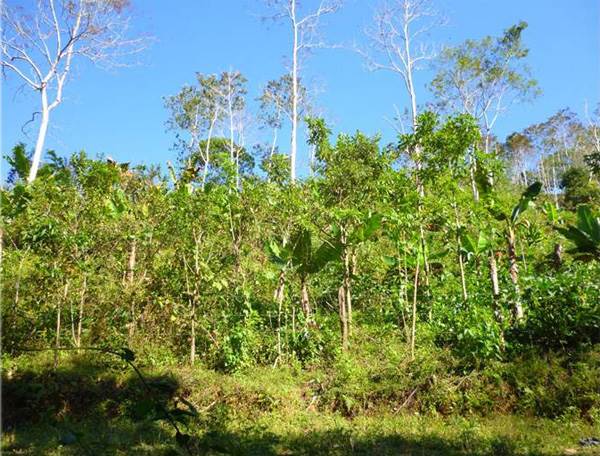
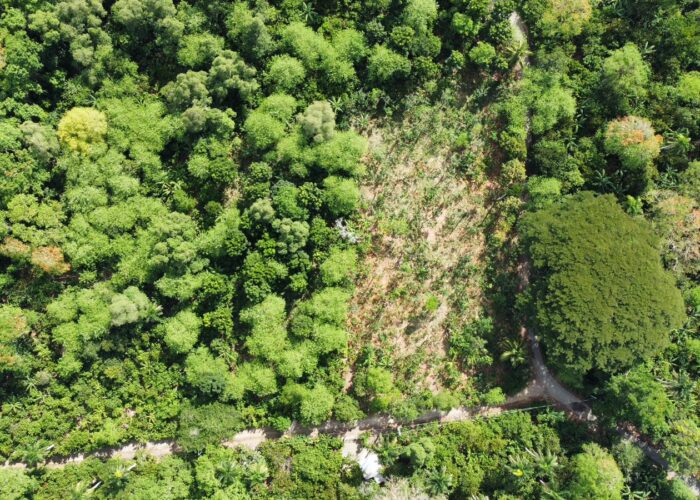
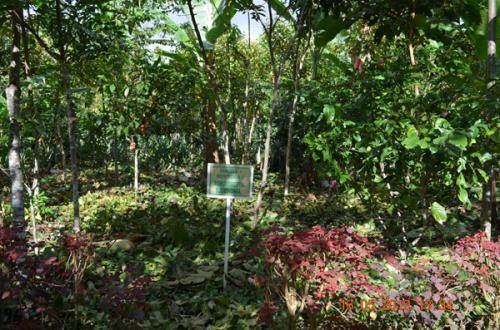
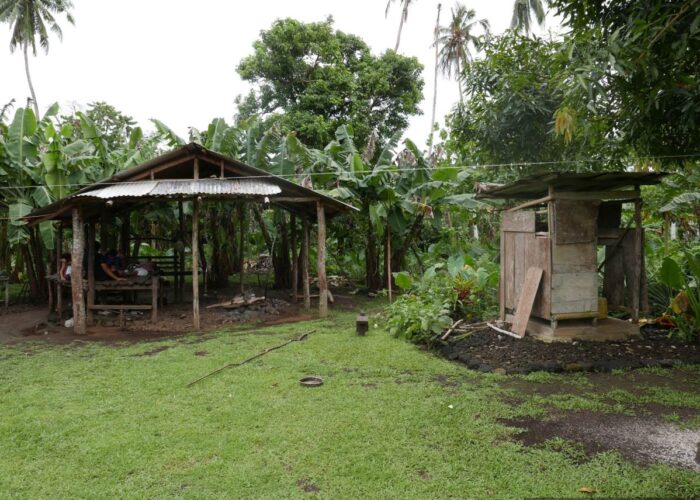
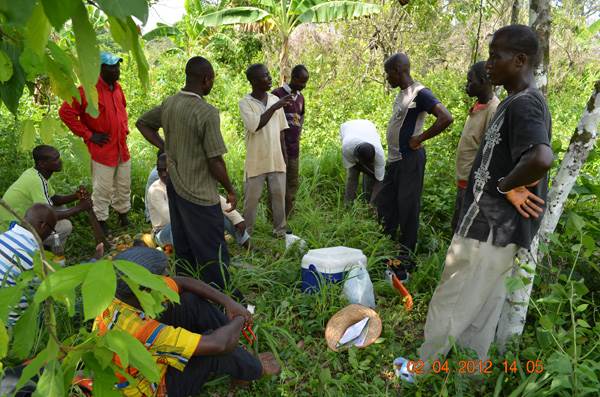
ECOTOP is contributing to the Regenerative Organic Cocoa Agroforestry Project in Sierra Leone, an initiative designed to restore degraded land, increase cocoa yields, and improve smallholder farmer incomes through Dynamic Agroforestry (DAF) systems. The project, funded under EU initiative, is a partnership between Tradin Organic, ECOTOP, and local farmer cooperatives. By implementing DAF across 1,100 hectares in its initial phase, with potential expansion to 20,000 hectares, the initiative aims to reduce deforestation, enhance biodiversity, and create a more sustainable cocoa value chain.
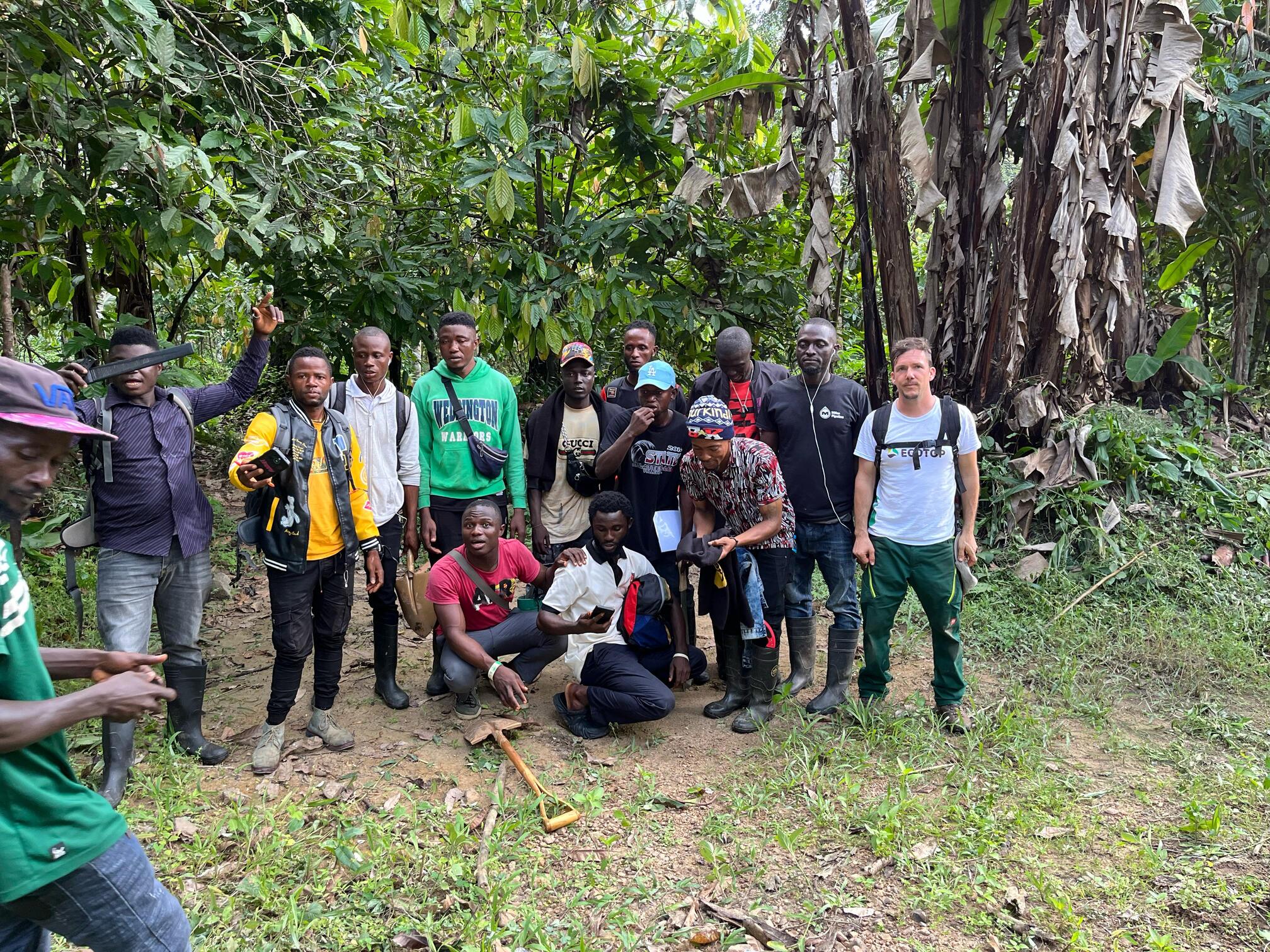
ECOTOP and Tradin Organic maintain a close cooperation towards the goals of the project. The following KPIs have been monitored:
ECOTOP and Tradin Organic are reshaping cocoa farming in Sierra Leone by integrating Dynamic Agroforestry principles into commercial and smallholder production. This initiative sets a new standard for sustainable cocoa farming, creating a resilient, high-quality, and climate-smart supply chain for the future.
As climate change intensifies, cocoa farmers increasingly face prolonged dry seasons, higher temperatures and greater water stress. Through practical field training, ECOTOP supports farming communities in adapting their Dynamic Agroforestry (DAF) systems to these changing conditions.
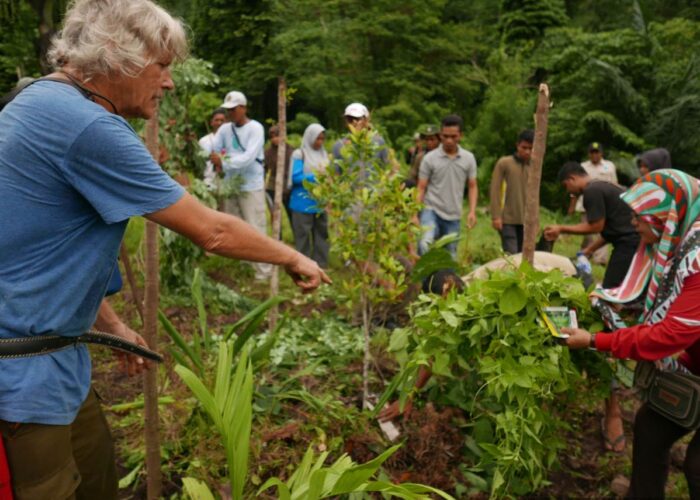
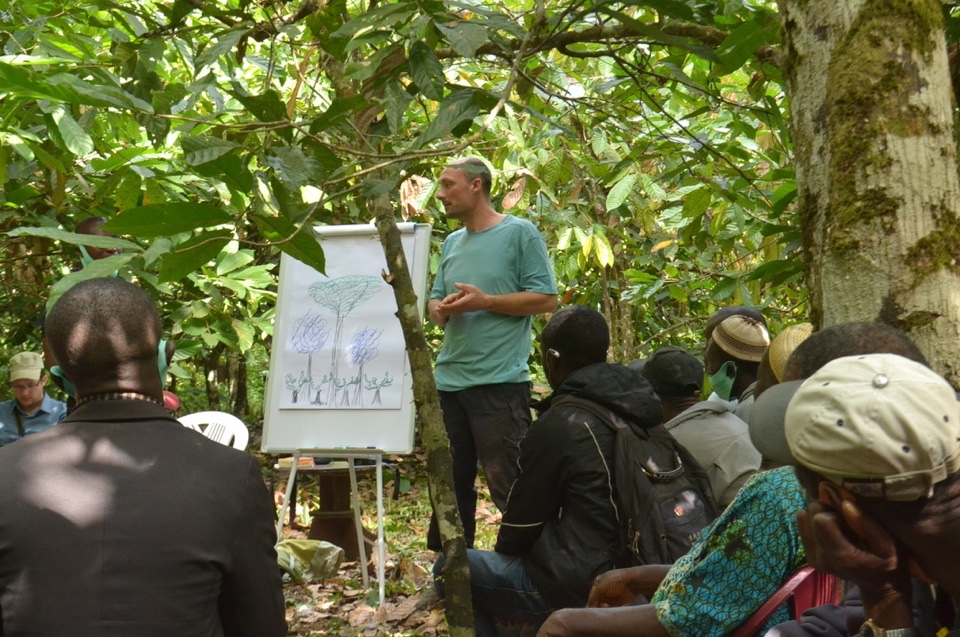
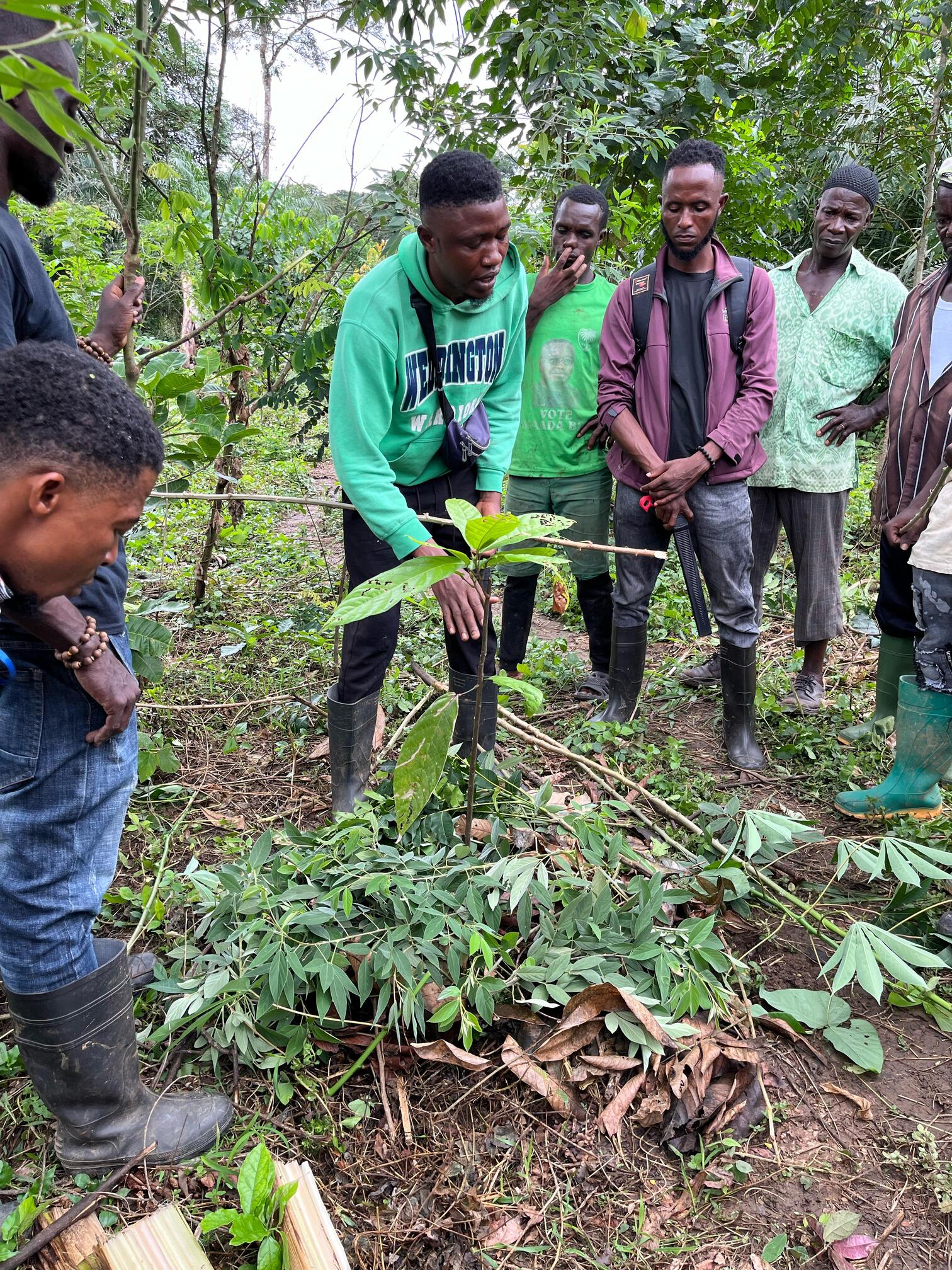
During field missions in 2025 and 2026, ECOTOP worked directly with farmers and local technical teams in the districts of Kono and Kenema. The March 2026 mission alone reached approximately 460 farmers across 8 communities, with 16 field training days and 10 DAF plots assessed.
Rather than relying on costly external inputs, the training focused on practical, locally available solutions for managing shade, soil cover, biomass and tree density according to changing field conditions.
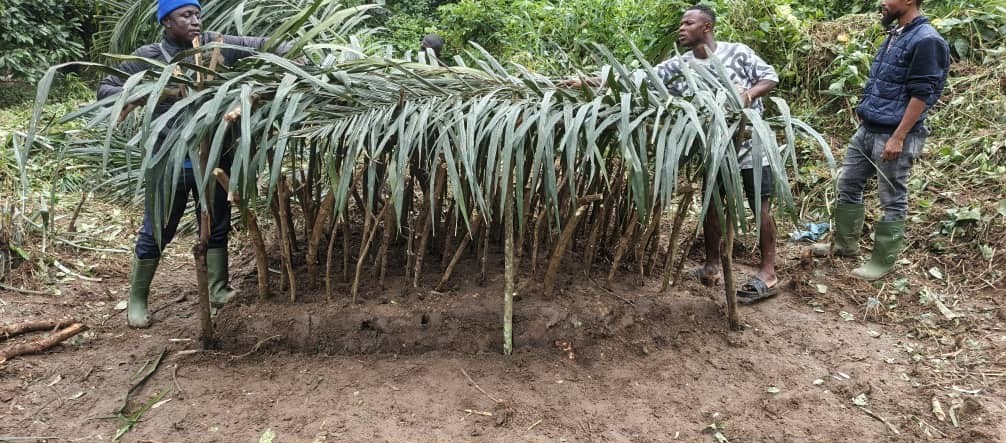
One of the key challenges during the dry season is protecting young plants from excessive heat while maintaining sufficient soil moisture. ECOTOP introduced simple adaptation measures that farmers could implement directly using locally available materials.
Field demonstrations focused on:
These measures help reduce heat stress and support plant survival during critical periods, while minimising the need for costly replanting. At the same time, farmers benefit from lower labour requirements and more resilient production systems.
A core principle of Dynamic Agroforestry is reducing dependence on external agricultural inputs. ECOTOP promotes this approach by training farmers to recycle nutrients already available within their production systems.
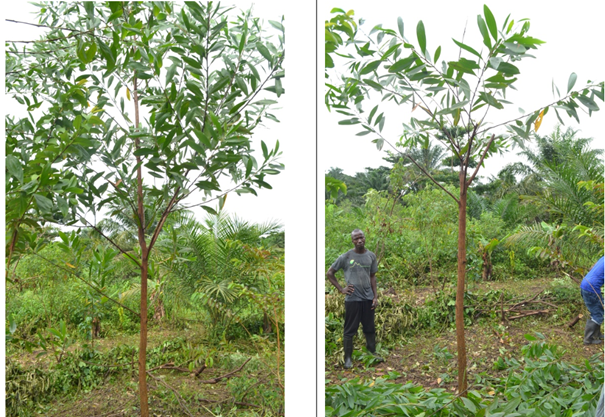
During the practical sessions, participants learned selective pruning techniques and immediately applied the resulting leafy biomass as mulch. As the organic material decomposes, valuable nutrients are returned to the soil while the protective mulch layer reduces evaporation, moderates soil temperatures and improves moisture retention throughout the dry season.
Managing Light, Biomass and Cocoa Growth
Farmers also learned three complementary pruning approaches — formation, maintenance and rejuvenation pruning — adapted to the age and condition of cocoa trees. Rather than applying a fixed technique, participants learned to assess each system and adjust pruning to optimise light distribution, stimulate healthy growth and maintain productive canopies.
This integrated management approach not only improves soil health but also strengthens farmers’ autonomy by reducing input costs and making production systems more self-sufficient.
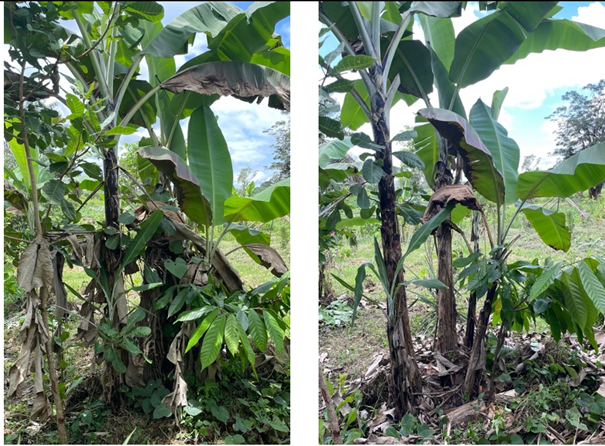
Balanced shade is essential for healthy cocoa production. While banana plants provide valuable microclimate regulation and protection against excessive solar radiation, their rapid growth requires continuous management to avoid excessive competition for light.
ECOTOP trained farmers in effective banana management within DAF rows, introducing the three-generation method, through which farmers maintain only the mother plant, daughter and granddaughter while removing excess suckers.
This helps prevent excessive shading of cocoa while maintaining the benefits of banana trees within the system. Removed suckers can be used as mulch or replanted elsewhere, keeping biomass and planting material within the farm.
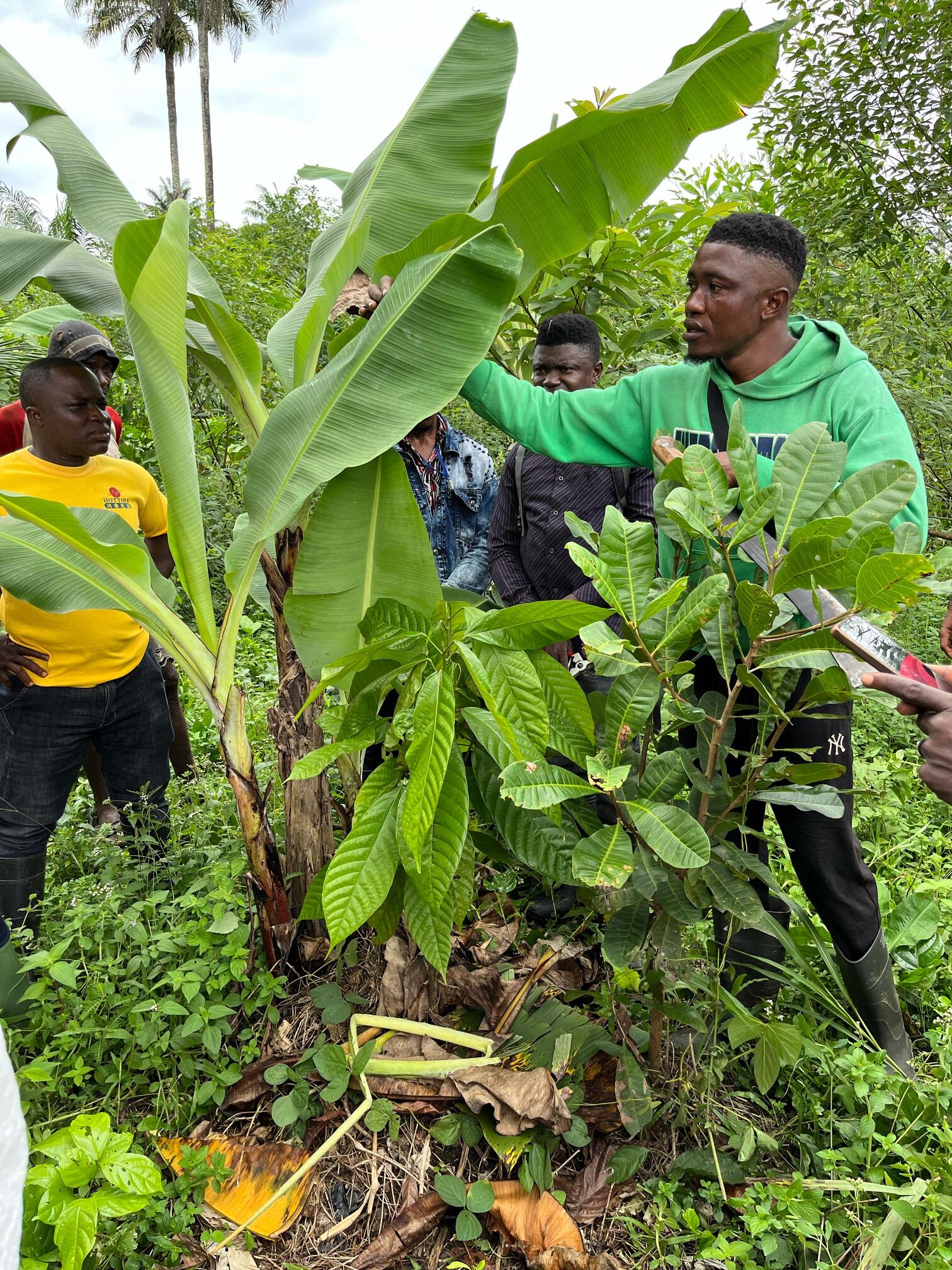
The 2026 mission also placed strong emphasis on building local technical capacity. Five Technical Officers progressively took on greater responsibility for delivering pruning demonstrations and facilitating practical learning sessions.
By combining practical field training with locally adapted, nature-based solutions, ECOTOP enables farmers to strengthen the resilience of their agroforestry systems under increasingly challenging climatic conditions. Through improved soil management, efficient nutrient cycling and adaptive shade management, farming communities enhance productivity, reduce dependence on external inputs and build more sustainable production systems for the future.
The activities align with the following Sustainable Development Goals (SDGs):