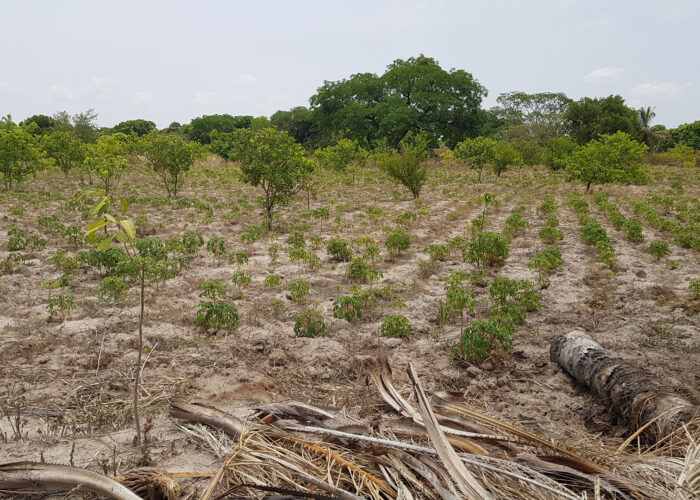
Across much of the Sahel, farmers face a familiar dilemma. The land they depend on sits at the edge of the desert, in a belt where rainfall is erratic, conflict disrupts planting seasons, and water management has never caught up with need. What was once, generations ago, a workable balance between people and land has grown steadily more precarious, and food security has followed it downward. Faced with degraded soils and unreliable harvests, many smallholders are left farming the same depleted plots the same way, because nothing else has been made available to them.
The consequences are stark. An estimated 52.8 million people across the region are projected to face food insecurity between June and August of this year (2). The causes compound one another: conflict, drought, and poor water management combine to erode the consistency of agricultural output that communities depend on (3). The real obstacle isn’t that farmers don’t want more resilient systems — it’s that, in most of the region, the systems and support needed to build that resilience have not reached them.
The Sahel is not a static backdrop to this problem — it is an intricate savannah biome that acts as a transitional zone between sub-Saharan Africa and the Sahara, and it does real ecological work: holding back the southward spread of desert, providing arable land, and regulating hydroclimatic conditions like rainfall and carbon storage that scientists track as indicators of broader climate change (1).
That landscape is shifting in real time. Rainfall has been increasing in parts of the region, producing a natural rise in vegetation that researchers have termed “the greening of the Sahel.” Governments across the region have also mounted a coordinated response of their own: the Great Green Wall, an initiative to plant a corridor of trees spanning 8,000 kilometres to halt desertification at the Sahara’s edge (4). Alongside these large-scale efforts, a quieter shift is underway at the farm level — more smallholders across Mali and Burkina Faso have been turning to agroforestry to rebuild soil fertility, diversify income, and strengthen food security (5).
That interest is significant, because it hasn’t historically translated into wide-scale adoption. Past efforts to introduce agroforestry to smallholders in the region have yielded very little success (5). Agroforestry’s promise here isn’t in question — within the region’s water-energy-land-food nexus, it is one of the few interventions positioned to ease multiple resource scarcity problems at once (6). What has been missing is a model that actually works on the ground, at the scale smallholders can use.
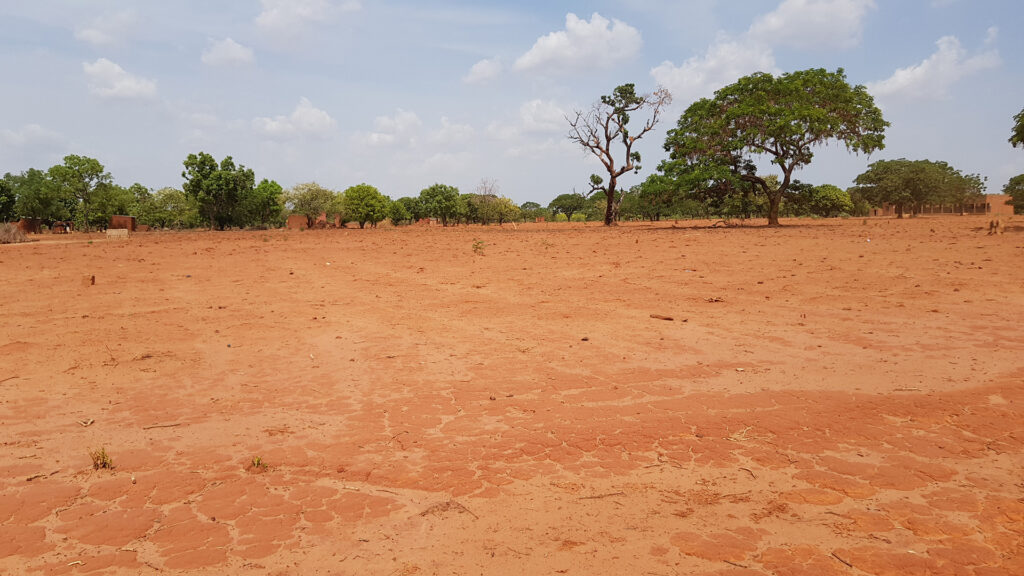
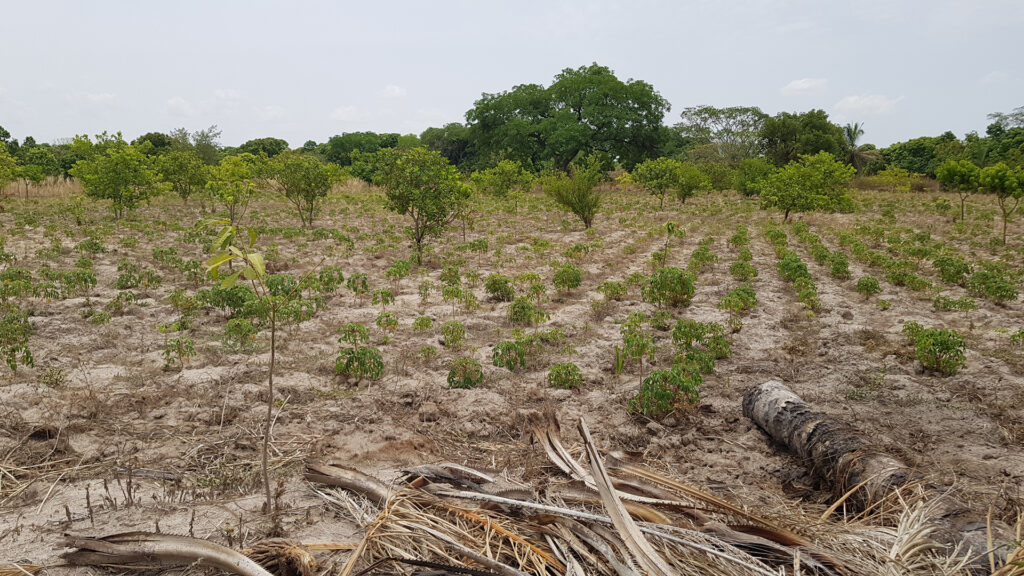
Dynamic agroforestry (DAF) is a system design, not a single technique: it layers a deliberately diverse mix of species — food crops, legumes, and companion plants — around a primary tree crop, so that the plot functions less like a single-species field and more like a managed, self-supporting ecosystem.
Cashew is where this is currently being tested most directly. Africa was the world’s largest net producer of cashew nuts in 2024, with Côte d’Ivoire, Ghana, Benin, and Burkina Faso all ranking among the top ten producing countries globally (7). But climate change is squeezing the crop that underpins those numbers: decreased and increasingly irregular rainfall is limiting the yields smallholders can achieve (8). DAF is a direct response to that pressure — using plot diversity and biomass to buffer the cashew system against the conditions eroding it.
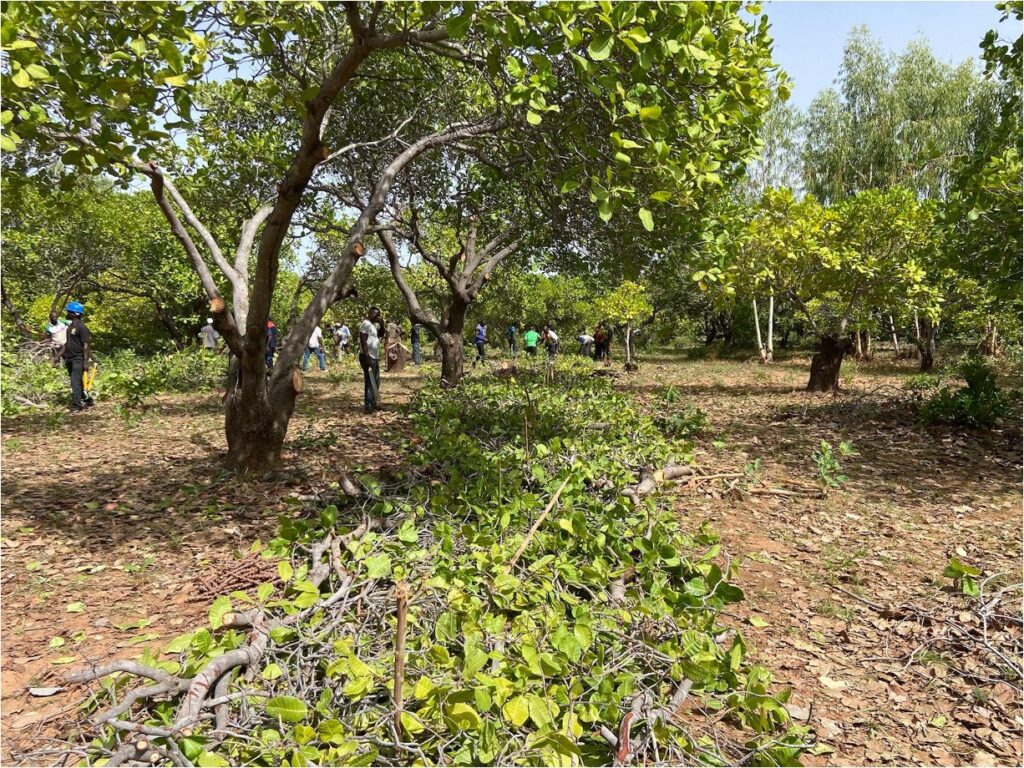
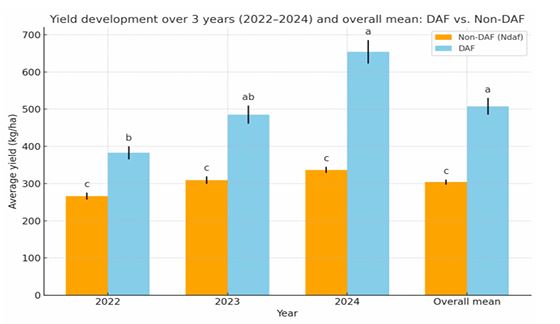
A project run by ECOTOP and partners in Burkina Faso tracked cashew yields in DAF systems against conventional, non-DAF systems from 2022 to 2025 (9). Between 2022 and 2024, 482 unproductive cashew plantations across 11 villages were converted to DAF. The resulting plots were dense by design — more than 30 species present, 16 of them deliberately planted, including pigeon peas, sorghum, beans, and cassava. Data was collected from paired plots in 7 villages, each pair consisting of a 2,500 m² DAF plot and a matched 2,500 m² non-DAF plot.
The results favoured DAF consistently, not just on average. Across the full period, DAF plots produced 507 kg/ha versus 304 kg/ha on non-DAF plots — a yield gain of roughly two-thirds. That gap wasn’t a one-time effect: DAF plots outperformed non-DAF plots in every year of data collection, and the yield trend over the three years climbed faster for DAF than for the conventional comparison. The system wasn’t just starting ahead — it was pulling further ahead over time.
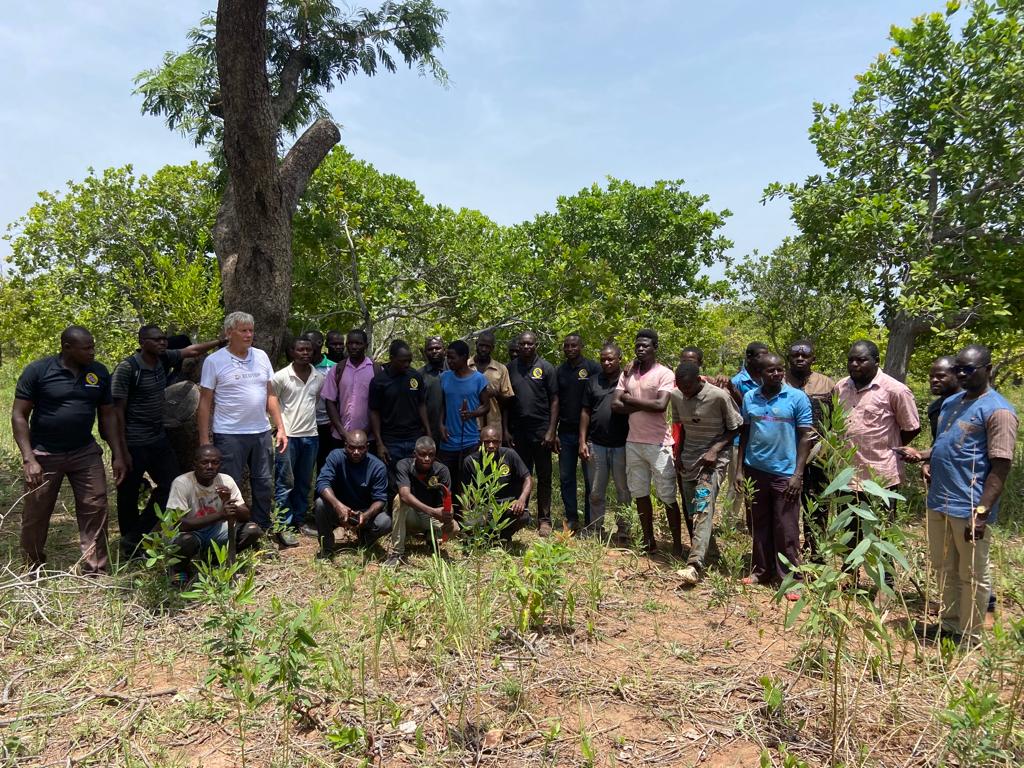
What makes this more than a single successful trial is that the model is already being carried into new settings. The typical scope of our work involves a preliminary assessment mission where diagnostics are done of the situation on the ground followed by an introductory DAF workshop for farmers and technicians. The creation of a planting matrix for species selection and plot design is paramount based on the situational context, regional environment, and farmer preference followed by field installation and planting of demo plots with farmers and technicians with ECOTOP at the helm.
In Preah Vihear, Cambodia, ECOTOP is supporting APOPO in establishing cashew-based production systems facing their own version of the same pressures — climate stress, irregular rainfall, drought, waterlogging, and pest and disease pressure. The work runs through field-based training: workshops, pruning demonstrations, biomass management, and plot design, aimed at building climate resilience while making smallholders more self-sufficient.
In the Upper West Region of Ghana, ECOTOP is working to integrate cashew production in DAF to address a cluster of constraints familiar from the Sahel itself — low soil organic content, erosion risk, wildfire pressure, climate stress, and limited income diversification. The approach there centres on farmer education in systems design and hands-on training in DAF management, the same combination of knowledge-transfer and technical skill-building that underpinned the Burkina Faso results.
Taken together, these projects trace a single pattern: a system proven under Sahelian conditions, now being adapted deliberately to other geographies that share its core vulnerabilities — degraded soils, volatile rainfall, and smallholders with limited room for error.
The choice facing many Sahelian farmers is often framed as a matter of endurance — hold on through drought and conflict, and hope conditions improve. Dynamic agroforestry rejects that framing. It doesn’t wait for rainfall to stabilize or for the region’s underlying pressures to ease; it rebuilds the plot itself into something more capable of absorbing those shocks, one diversified, biomass-rich system at a time.
The evidence from Burkina Faso shows the model works where it has been tried, and not marginally — a persistent, widening yield gap over three consecutive years is not the signature of a fragile intervention. The task now is the same one facing every promising agroforestry model: move it from a small number of demonstration villages to the scale the region’s food security numbers demand. ECOTOP’s parallel work in Cambodia and Ghana suggests the model travels. What the Sahel needs next isn’t more proof that dynamic agroforestry works — it’s the training pipelines, technical support, and farmer-level access that turn a proven system into one every smallholder who needs it can actually adopt.