Date: 29/09/2026
As part of the “Scaling Cocoa Sustainability: High-Canopy Pruning as a Game-Changer in Agroforestry” project, a research programme is being implemented to generate scientific evidence on the role of high-canopy pruning in Dynamic Agroforestry (DAF) cocoa production systems.
The research is the scientific component of this broader project and is being implemented by ECOTOP, FiBL, HALBA and local partners in Bolivia, Ecuador and the Dominican Republic. It builds on two important sources of experience: ECOTOP’s long-standing work in advising and promoting Dynamic Agroforestry systems in different regions, and the 19 years of experience of the SysCom Long-Term System Comparison (LTE) in Bolivia, led by FiBL and the ECOTOP Foundation.
Inspired by this experience, the research focuses on high-canopy pruning and its potential to influence cocoa productivity, the resources required to manage the system, and the balance between cocoa production and the ecological functions of agroforestry. The central question is: can high-canopy pruning help maintain or improve cocoa productivity while keeping the ecological functions and diversity of Dynamic Agroforestry systems?
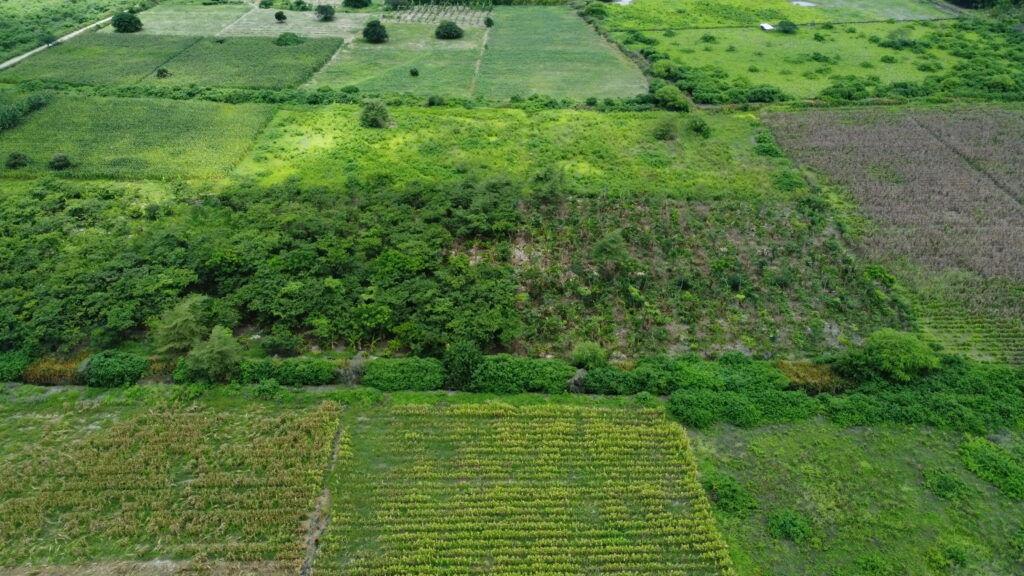
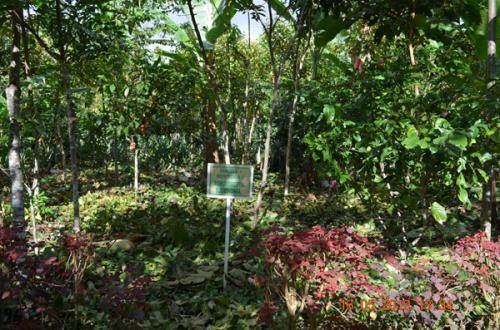
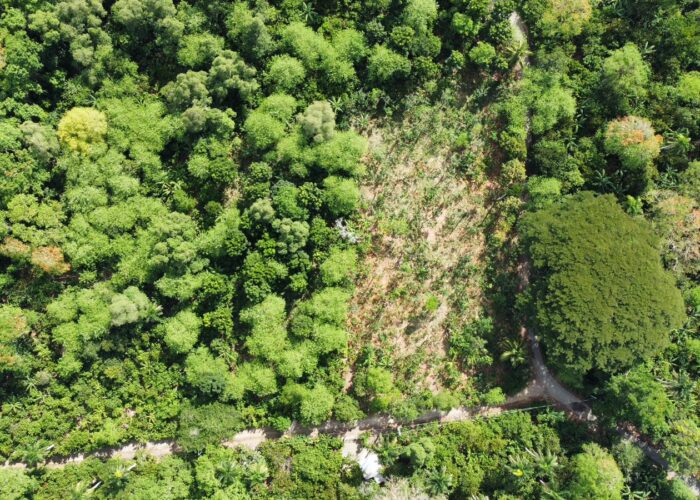
The research follows a common experimental design across the three countries, with a target of five research plots per country. Each plot covers approximately one hectare and is divided into four subplots. Two subplots receive the high-canopy pruning treatment, while the other two remain unpruned as a reference. Within each subplot, a defined sampling area is established to avoid edge effects and ensure that measurements are taken from comparable areas. This allows changes associated with pruning to be assessed against an unpruned reference within the same research plot. The selection of the plots was also based on minimum conditions considered necessary for meaningful comparisons. These included cocoa tree density, the density of accompanying trees and slope, among other characteristics. The aim was to work with plots that were sufficiently comparable at the beginning of the study while still representing the diversity of agroforestry conditions found in the three countries.
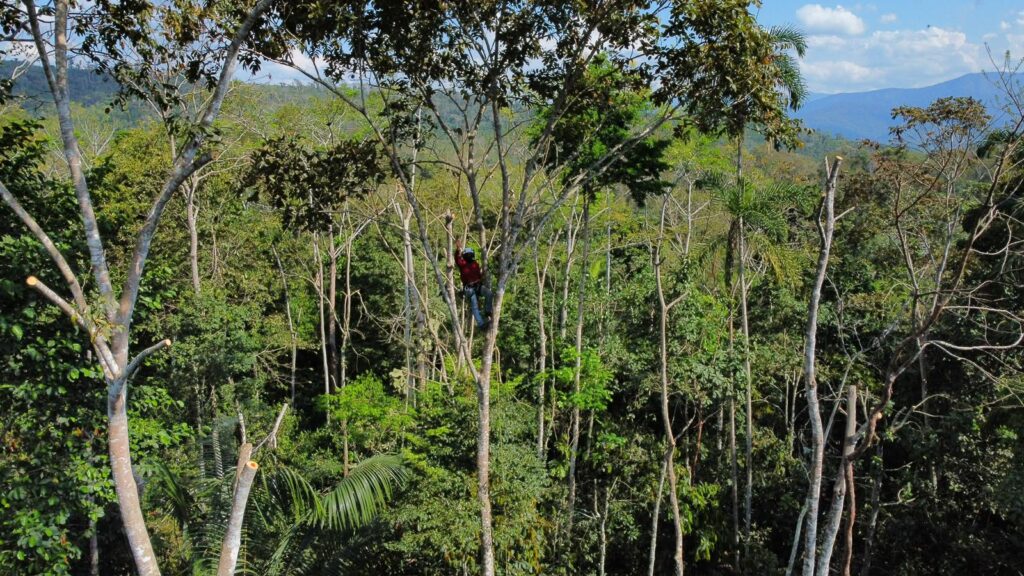
The research collects data on cocoa production, canopy cover, tree development, labour requirements and, in Ecuador, water availability. Cocoa harvests are monitored to determine how production changes following pruning. Canopy cover is measured to document changes in the area and shade available to cocoa trees. To characterize tree development and competition within the system, we measure the diameter of both cocoa trees and accompanying trees. These measurements help us understand the size and development of the different tree components and how their relationships may change following pruning.
The research also records labour requirements, particularly the work involved in implementing and maintaining high-canopy pruning. This is important because the value of a management practice depends not only on its effect on cocoa production, but also on the resources required to implement it. In Ecuador, the research includes an additional focus on water availability. Tensiometers will be installed and field capacity will be determined to assess soil water conditions and explore how changes in canopy cover may be related to water availability in the cocoa system.
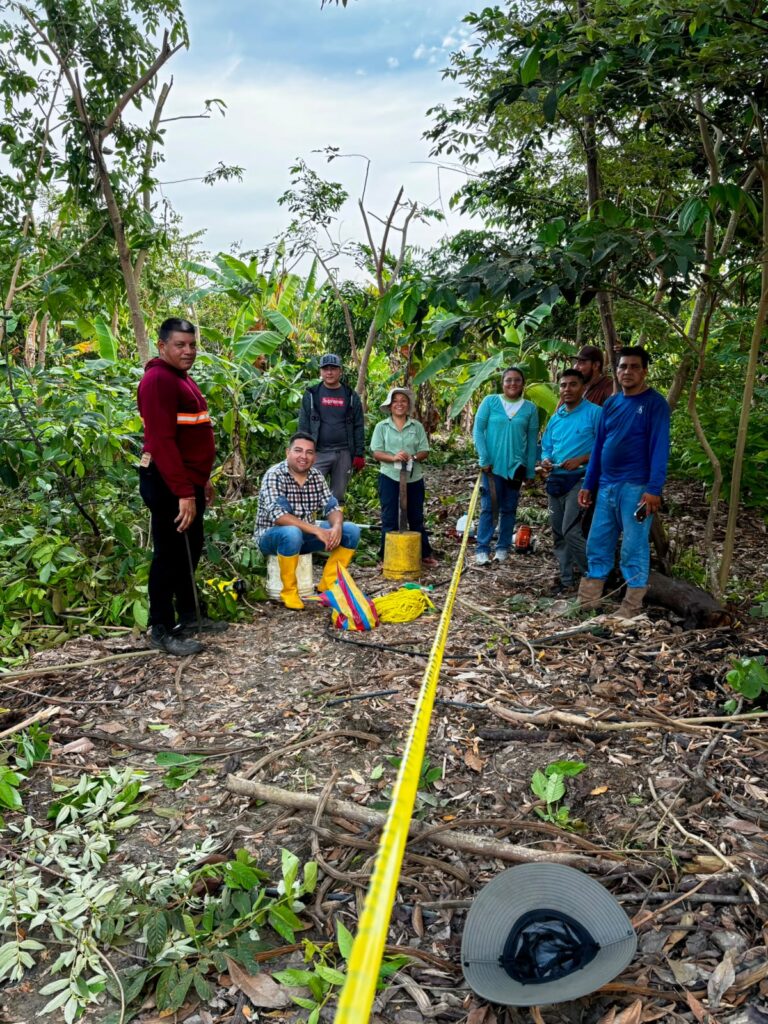
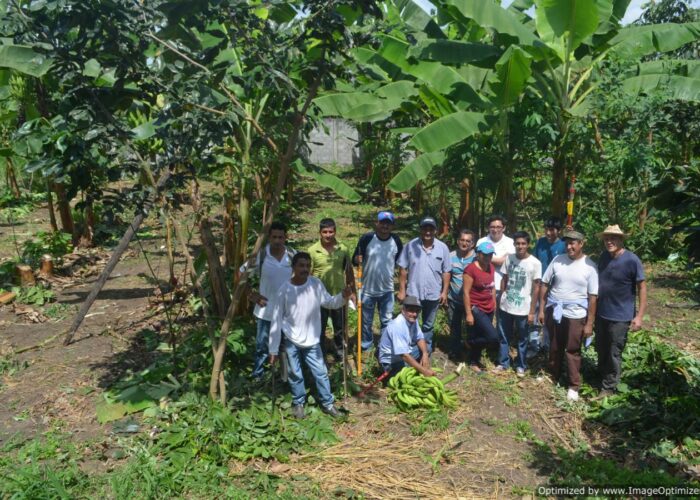
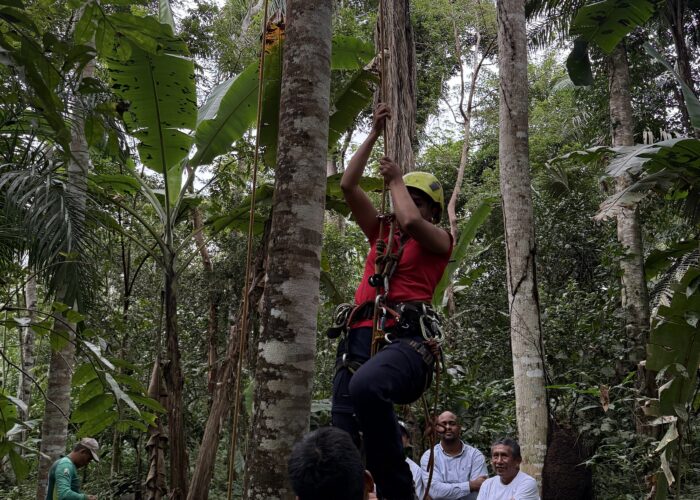
The research started in October 2025, and the selected plots have now been established across Bolivia, Ecuador and the Dominican Republic. Baseline measurements have been completed, providing the reference data needed to follow changes over time. High-canopy pruning has been carried out in most of the plots, and regular monitoring is now underway. The research will continue to follow the plots through subsequent production cycles and changes in canopy cover, allowing the effects of the intervention to be documented over time rather than assessed only shortly after pruning.
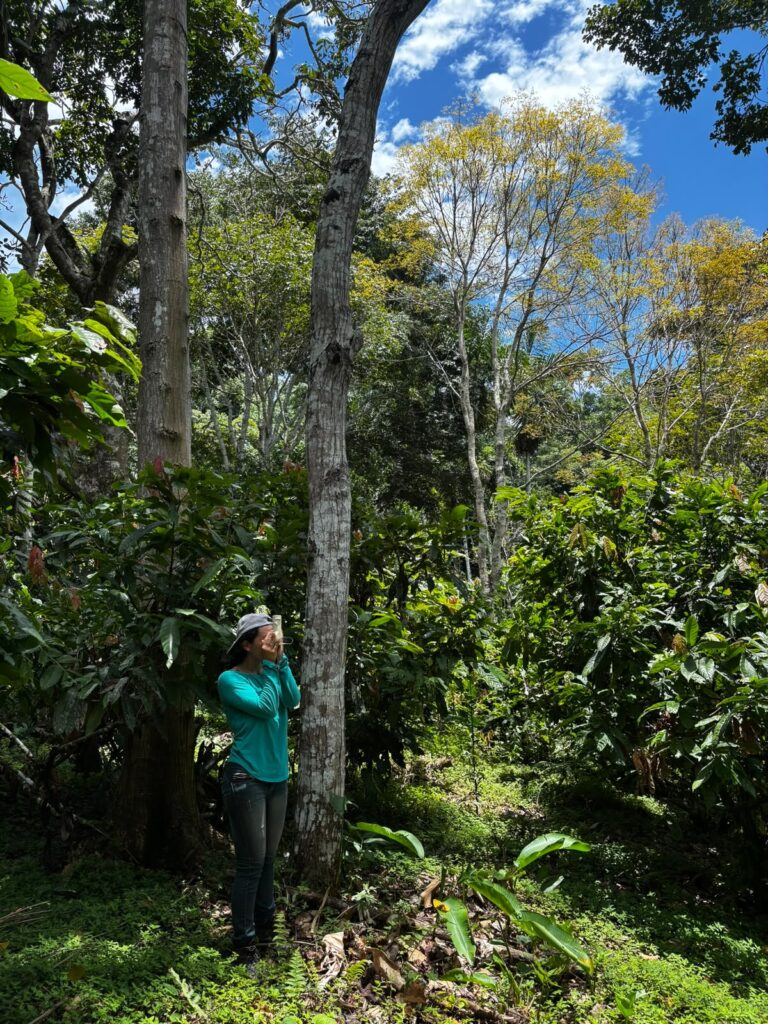
A distinctive feature of the research is the collaboration between FiBL as a research institute, ECOTOP as a service provider organisation with extensive experience in Dynamic Agroforestry, HALBA as a chocolate manufacturer, and cocoa producer organisations: EL CEIBO in Bolivia, UNOCACE in Ecuador, and COOPROAGRO in the Dominican Republic.