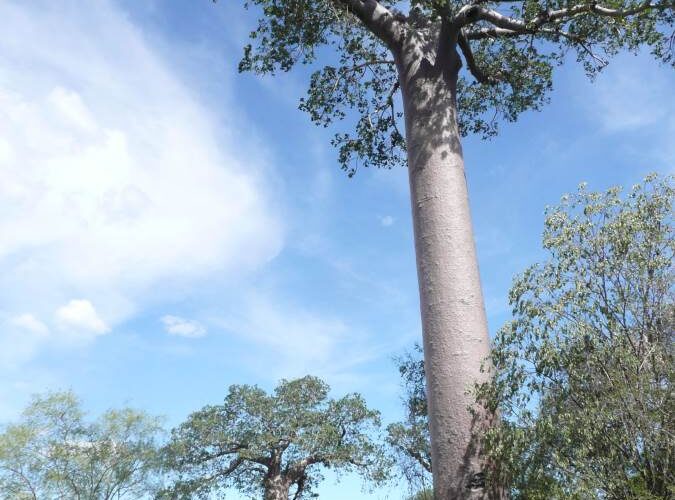
Madagascar holds an estimated 11,516 species of vascular plants. 82% of them exist nowhere else on Earth. Add over a thousand species of bryophytes, more than a quarter endemic too, and you get a sense of what’s at stake here (2). An estimated 56.8% of the country’s vertebrates and 87.8% of its plants are threatened, mostly by agriculture: deforestation, slash-and-burn clearing (3).
The global numbers aren’t much better. The 20th century saw 2% to 11% of biodiversity lost, driven by climate change and land-use change. Projections for what comes next are worse: 0.92% to 5.1% loss per decade once both factors combine (1). Agriculture, as most of the world practices it, is a big part of that. However, agriculture is central to the livelihood of the Malagasy people. So, the question is whether there’s a version of farming that doesn’t cost us the forest.
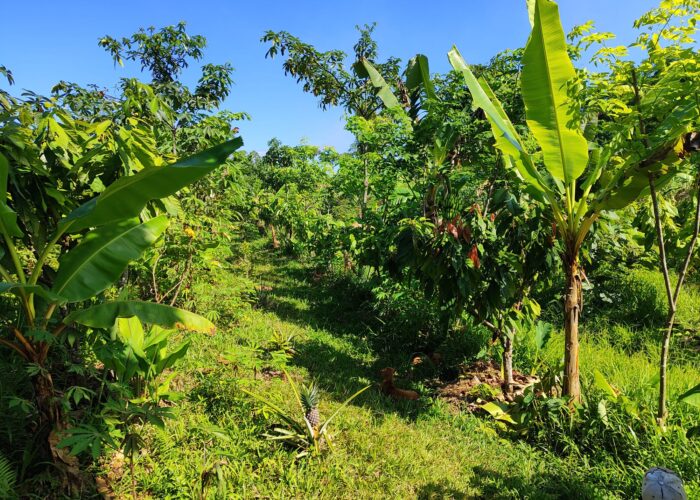
Agroforestry means growing crops alongside trees instead of clearing them out. Trees create habitat, food, and breeding sites for wildlife, which supports the services farmland actually needs: pollination, pest control, water regulation (4).
Researchers have also studied agroforestry as a buffer zone around Natural World Heritage Sites. It protects carbon sinks and soil fertility, and it generates income through marketable crops and ecotourism (5). It also reinforces the ties indigenous communities have to that land (5). Another initiative done by WCS Madagascar that conserves Madidi National Park using coffee agroforestry produced 18 tons in 2021 (10). Agroforestry systems have the potential to be as biodiverse as secondary forests in species richness when managed properly (6).
Dynamic Agroforestry (DAF) pushes further than a loose mix of trees and crops. It’s designed to copy the actual structure of a primary forest, its layers, its succession, its density (7). A study from this year tested DAF as a conservation effort as older DAF systems in the Amazon found have matched the ant species richness of untouched primary forest (8).
In Madagascar, where the threat to biodiversity comes directly from how land gets farmed, that finding carries weight (9).
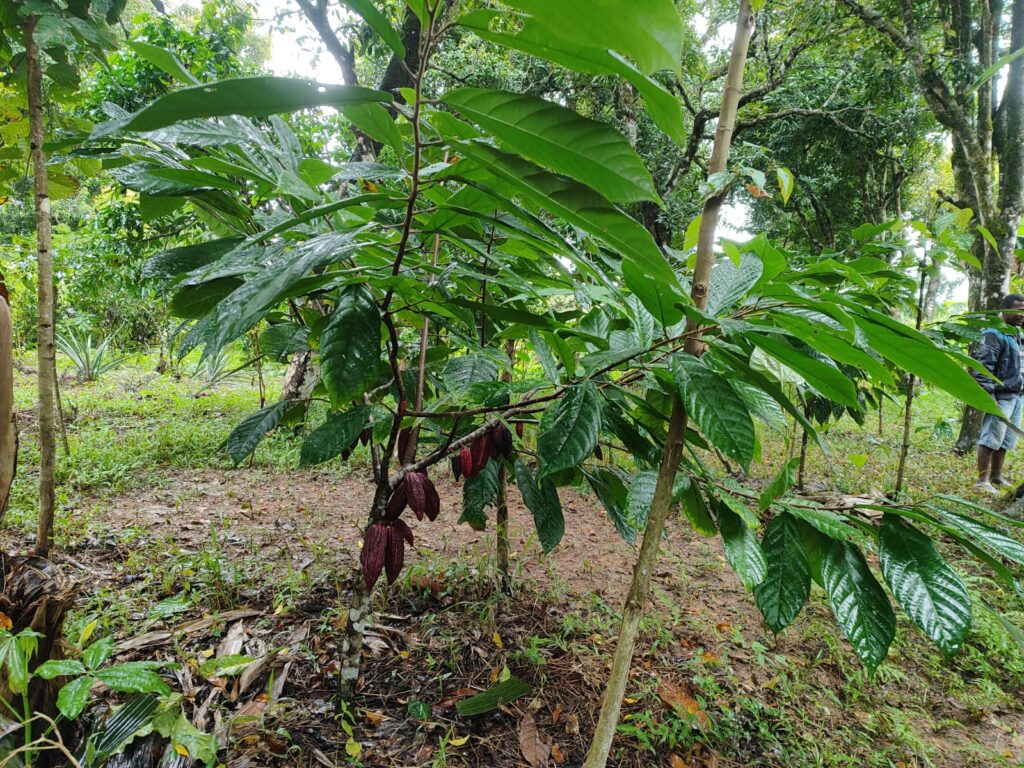
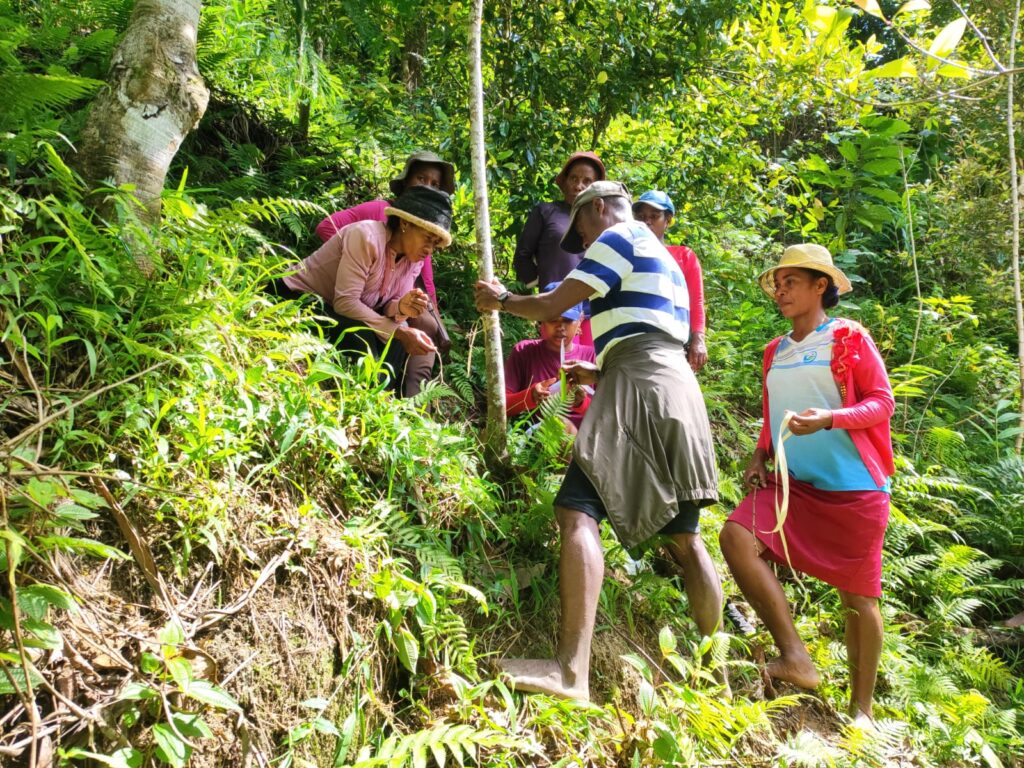
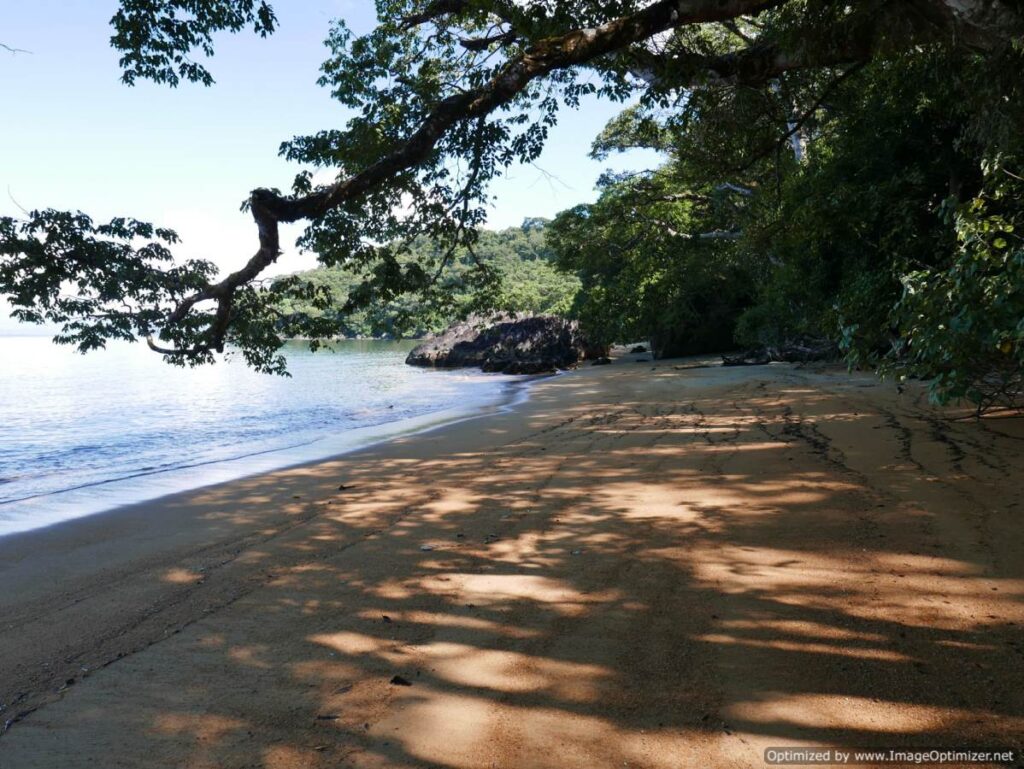
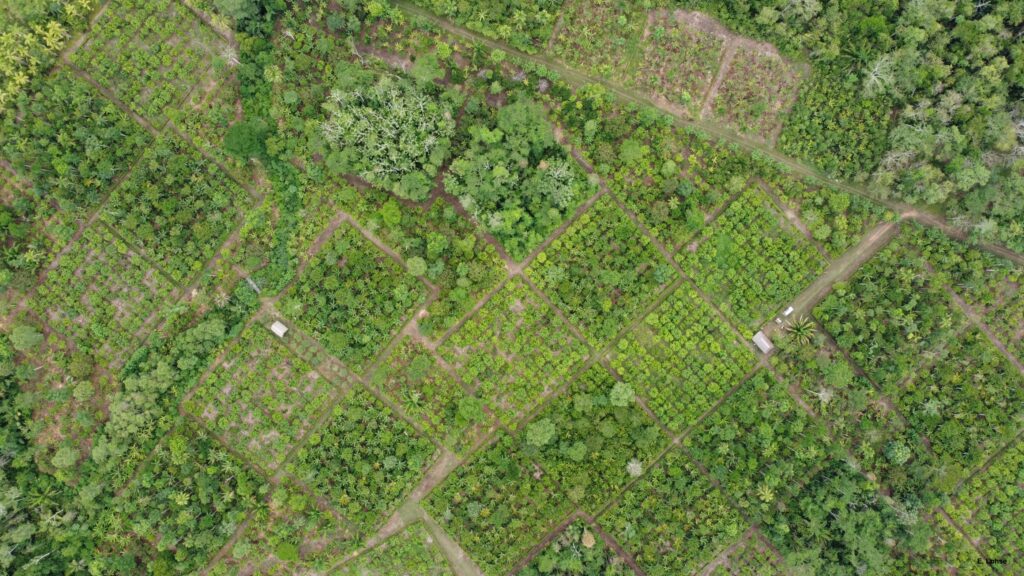
In MaMaBay, Madagascar, ECOTOP partnered with HALBA and the Wildlife Conservation Society on a four-year program training local smallholders in DAF cocoa production: stratification, pruning, species selection, and the rest of the techniques that make the system work. By the end of it, 125 hectares of DAF plots had been established, inspected, and handed off with a final round of training workshops. A second phase runs from 2024 to 2027. So far it has reforested 130 hectares across 8 sites, revegetated 2 risk zones, and protected shoreline in 11 areas through slope planting.
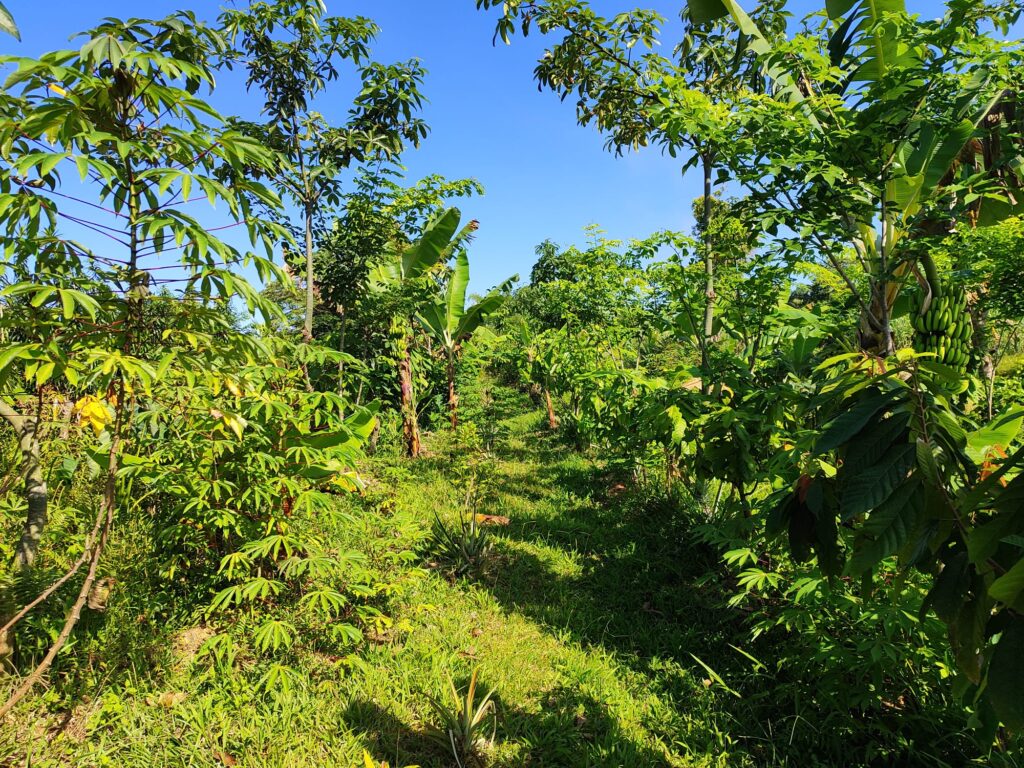
Madagascar shows DAF can be taught and scaled in a real, high-stakes landscape. Bolivia shows why it works and whether it holds up.
In the Alto Beni region, FiBL and Bolivian partners have run the SysCom trial for over a decade: conventional monoculture, organic monoculture, organic agroforestry, and DAF cocoa systems, all planted on the same land, under the same soil and climate. That design lets researchers isolate what DAF actually contributes, rather than guess at it.
Bird data from the trial shows higher counts visits from a wider range of bird species in DAF compared to all the other systems. Microfauna also thrive more in DAF as a study shows higher species count and richness in bacterial and fungal communities compared to the other systems available (11) . DAF plots consistently support more species than the alternatives (7). The trial also tracks yield and soil fertility over time, and that number matters more. DAF cocoa has held its economic ground against conventional systems while needing far fewer external inputs, less fertilizer, less pesticide. That’s the usual objection to conservation-minded agriculture: that protecting the ecosystem means the farmer pays for it. In Alto Beni, that hasn’t held up.
Madagascar proves the model transfers to smallholders where it’s needed most. Bolivia proves it keeps working once the novelty wears off.
DAF isn’t a gentler form of conventional farming. It’s a conservation tool that still produces a crop worth selling.
Madagascar shows the model moving out of research trials and into the hands of smallholders in one of the most biodiverse, most threatened landscapes on Earth, with reforested hectares and protected shoreline to show for it. Bolivia shows the biodiversity gains aren’t a first-year fluke and the yields don’t quietly drop once the pilot phase ends.
In Madagascar, the main driver of biodiversity loss isn’t climate change, it’s how the land is farmed (3). Models that change how farming happens will likely do more than models that just try to farm less. What’s missing is tighter feedback between contexts like these: measuring newer Malagasy DAF plots against the Alto Beni baseline instead of treating each project as its own story, and moving DAF out of the NGO-pilot category and into land-use policy.