Nuestros servicios
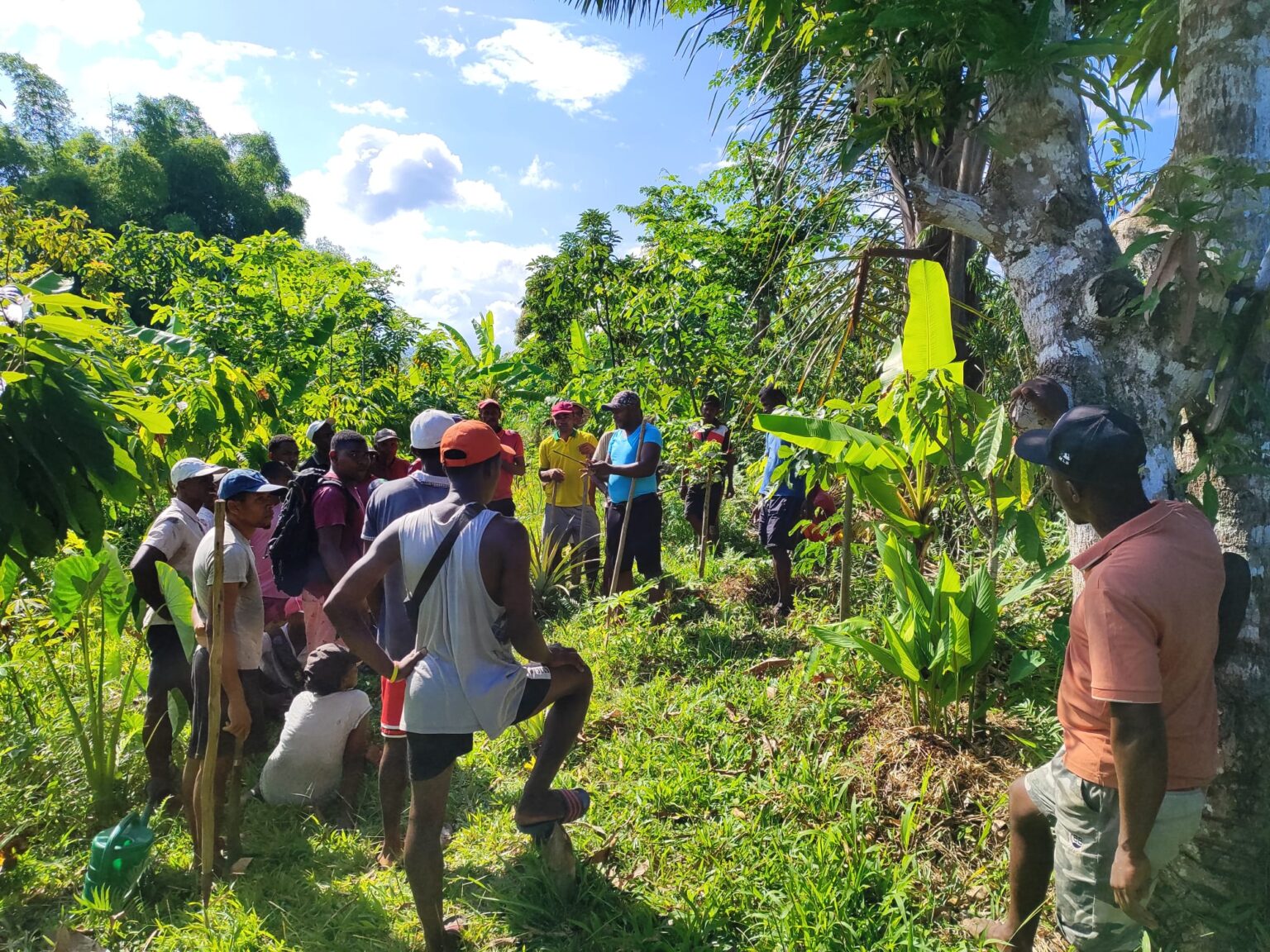
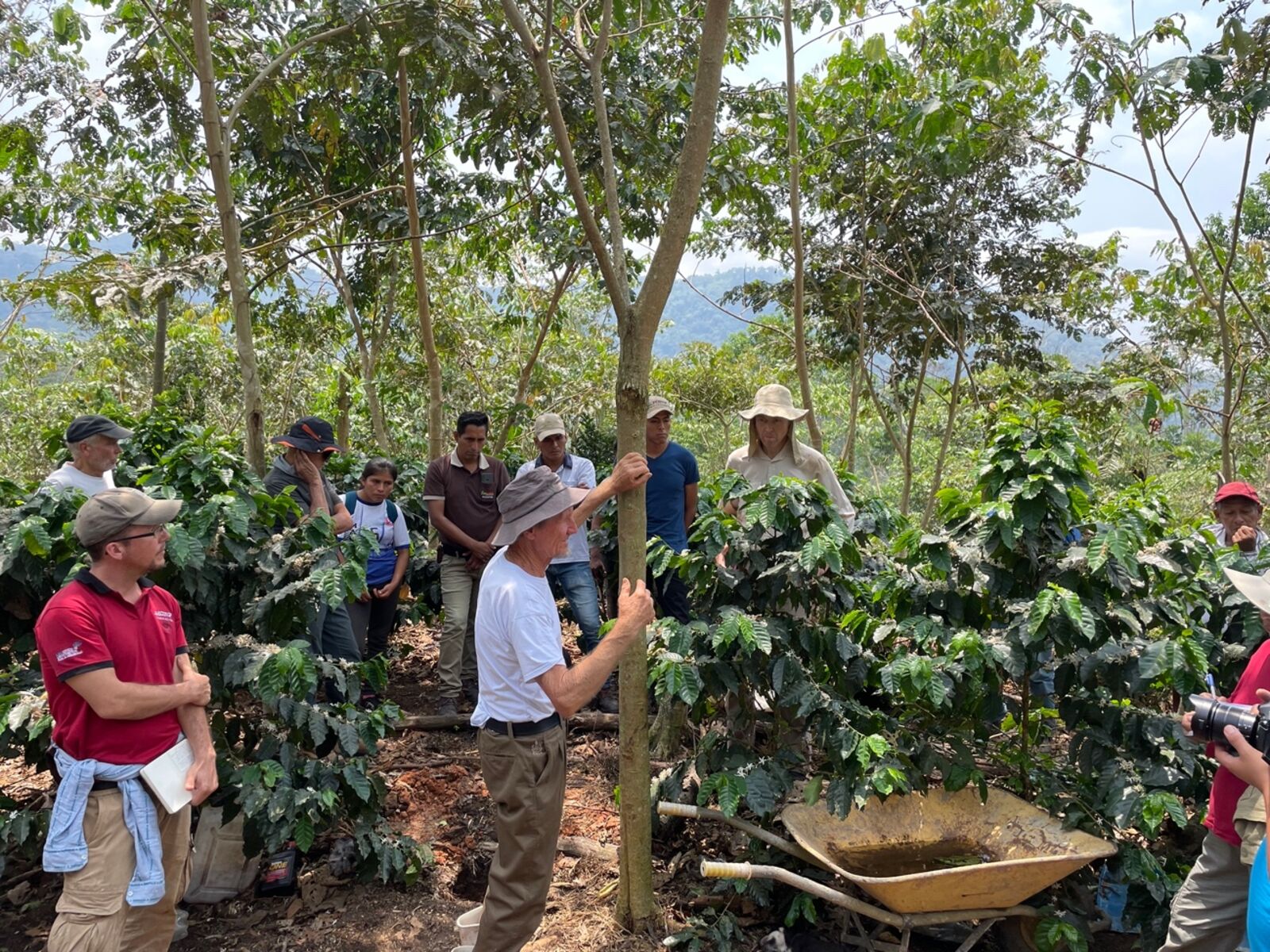
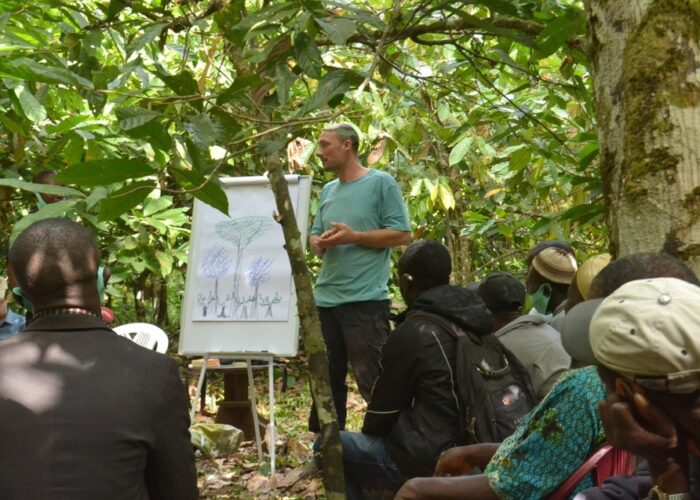
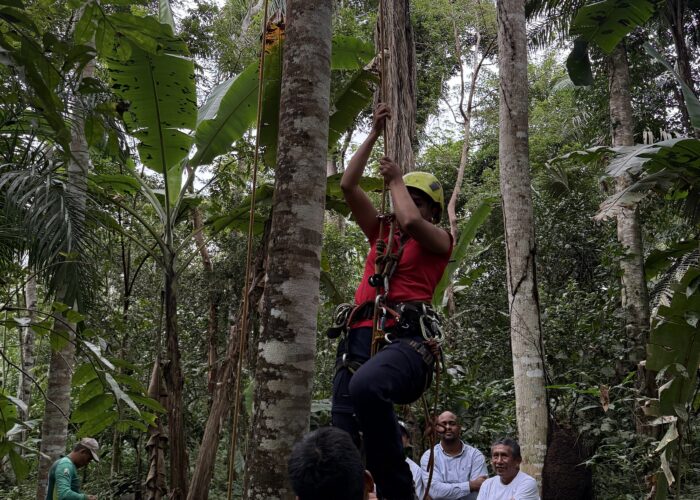
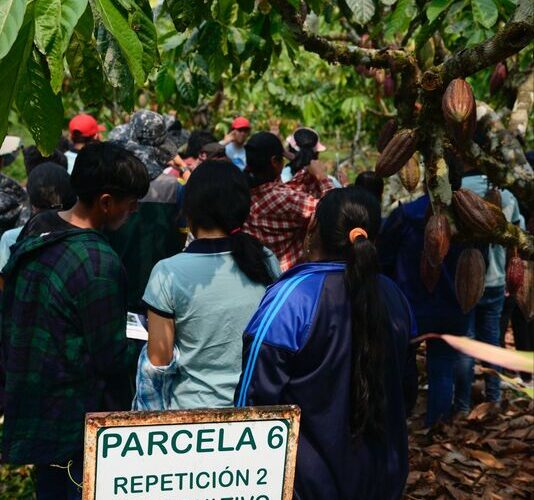
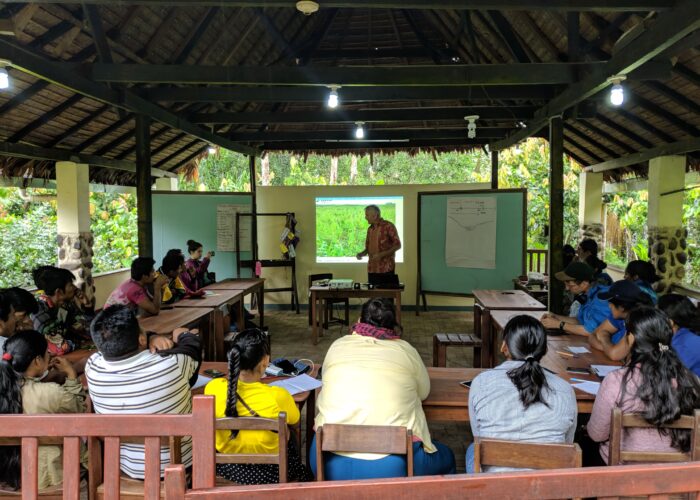
Training and technical assistance in Dynamic Agroforestry for the people who will run the plots: your farmers, your field technicians, your agronomists. Part of it happens in a classroom. Most of it happens on a plot, and it continues there until soils and yields show the change.
La diferencia
Most agroforestry training covers practices. Plant shade trees, prune, diversify. Participants leave with principles and nothing concrete to apply them to.
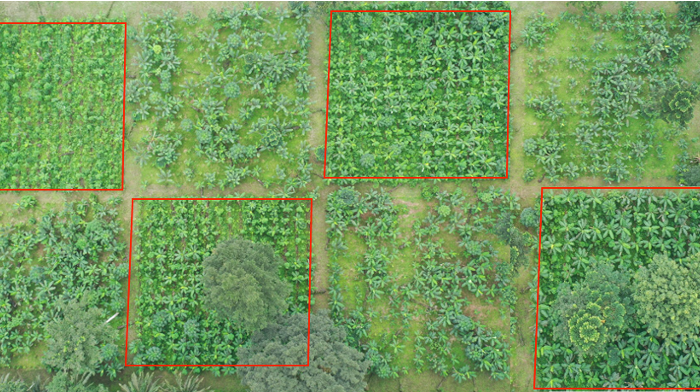
We teach Dynamic Agroforestry as one method, and it is the same method under long-term scientific test. At Sara Ana in Bolivia it has been compared with conventional and monoculture cocoa on the same site for 18 years, with FiBL holding the scientific lead. At CRIG in Ghana it is being compared with the institute's own conventional plots. What gets taught in a workshop is what is being measured in those trials. See the trial data →
Our trainers are agronomists and farmers, or people with long experience of farming. ECOTOP requires its staff and consultants to run Dynamic Agroforestry on their own plots. That changes how a training is received: the person holding the pruning saw has cut their own trees and can say what it cost them and what it returned. Farmers give that credit quickly, and they give it to very few outsiders. It is the difference between a group that listens politely and a group that plants.
What participants learn
Why succession, planting density and pruning work as one system, and what separates DAF from conventional shade planting.
How a system moves toward fertility, and how species are grouped by life cycle and stratum. Taught with the Successional Model and the Erosion Box, tools we developed in our own field courses.
Species selection, planting layouts, densities, and the short-cycle crops that carry the first years, designed for the participants' own sites.
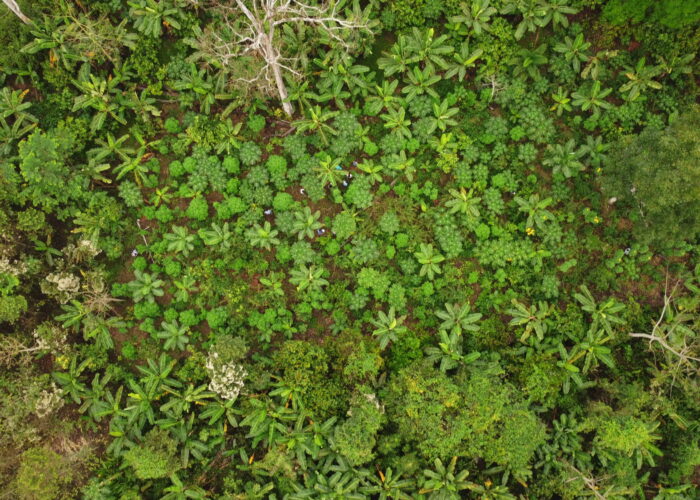
Site preparation, nursery work, planting, and the first management passes, done on the demonstration plot the group builds.
Pruning, biomass management and stratification, and how to read a plot to decide what to cut next and when.
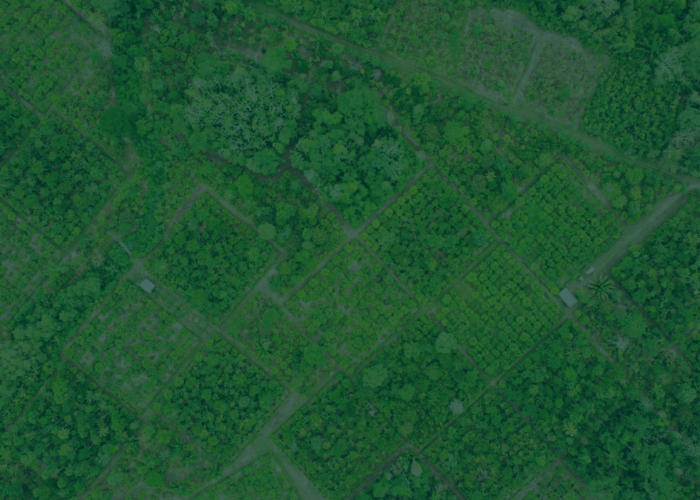
Survival, growth and stratification tracked over time, so the group can read what the system is doing and adjust. Plots are recorded in the DAF Tracker.
How a programme runs
A programme runs as a series of blocks. Each block covers one stage over several days: introduction and principles, then the successional model, then design, then installation. Blocks are spaced so participants work their plots in between and arrive at the next one with real questions.
Sessions move between the classroom and the plot rather than separating them into a course and a field trip.
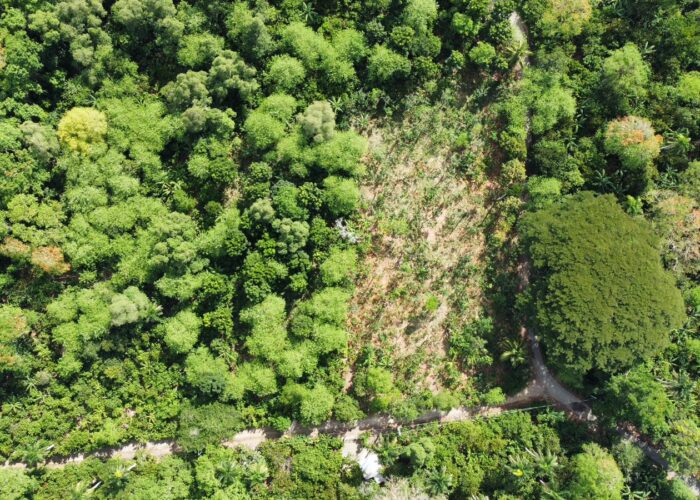
Participants design and plant it themselves. It stays behind as the region's reference plot.
Participants manage what they planted, so the next block opens with what actually went wrong.
Trainings are delivered in the working language of your team.
Technical assistance
A course ends. A plantation does not. The years after planting decide whether soils recover and yields rise, and that is where most agroforestry programmes go quiet. We stay on the plot.
Trainers come back to the plots between and after the blocks: what has grown, what to cut, where density or the species mix needs correcting.
Your technicians keep a line to the trainer who knows their plots, so a pruning or planting decision does not wait for the next mission.
Where plots are recorded in the DAF Tracker, assistance follows the ratings: the plots that lag get the visit.
Assistance is planned around the first years of the system, until ground cover, biomass and the first harvests show that the change is holding.
Who we train
Technical capacity that stays inside the cooperative, with lead farmers who can run sessions for their own members.
Field staff who can design and supervise DAF plots across a sourcing region.
Programme staff who need to implement agroforestry rather than commission it.
Your own people trained to install and manage the system on your land.
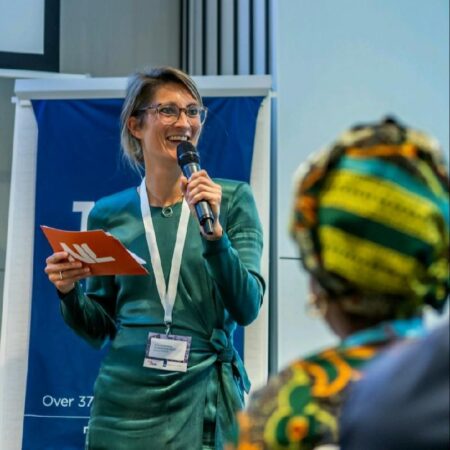
En 2021, introdujimos la Agroforestería Dinámica para nuestros cacaocultores de Sierra Leona. La pasión y la experiencia de ECOTOP nos ayudaron a Tradin Organic maximizar continuamente los ingresos de los agricultores, los rendimientos y la resistencia al clima, al tiempo que se amplía a nuevas regiones de abastecimiento.
Nuestros servicios
Desde la primera evaluación hasta el traspaso de responsabilidades a los equipos locales.
Más información →Compensación de emisiones de carbono según las metodologías de los organismos certificadores y las auditorías realizadas por terceros.
Más información →Datos de campo, paneles de control y la diligencia debida de la EUDR, todo en una sola herramienta.
Más información →Ensayos clínicos revisados por pares que demuestran la eficacia del DAF a gran escala.
Más información →