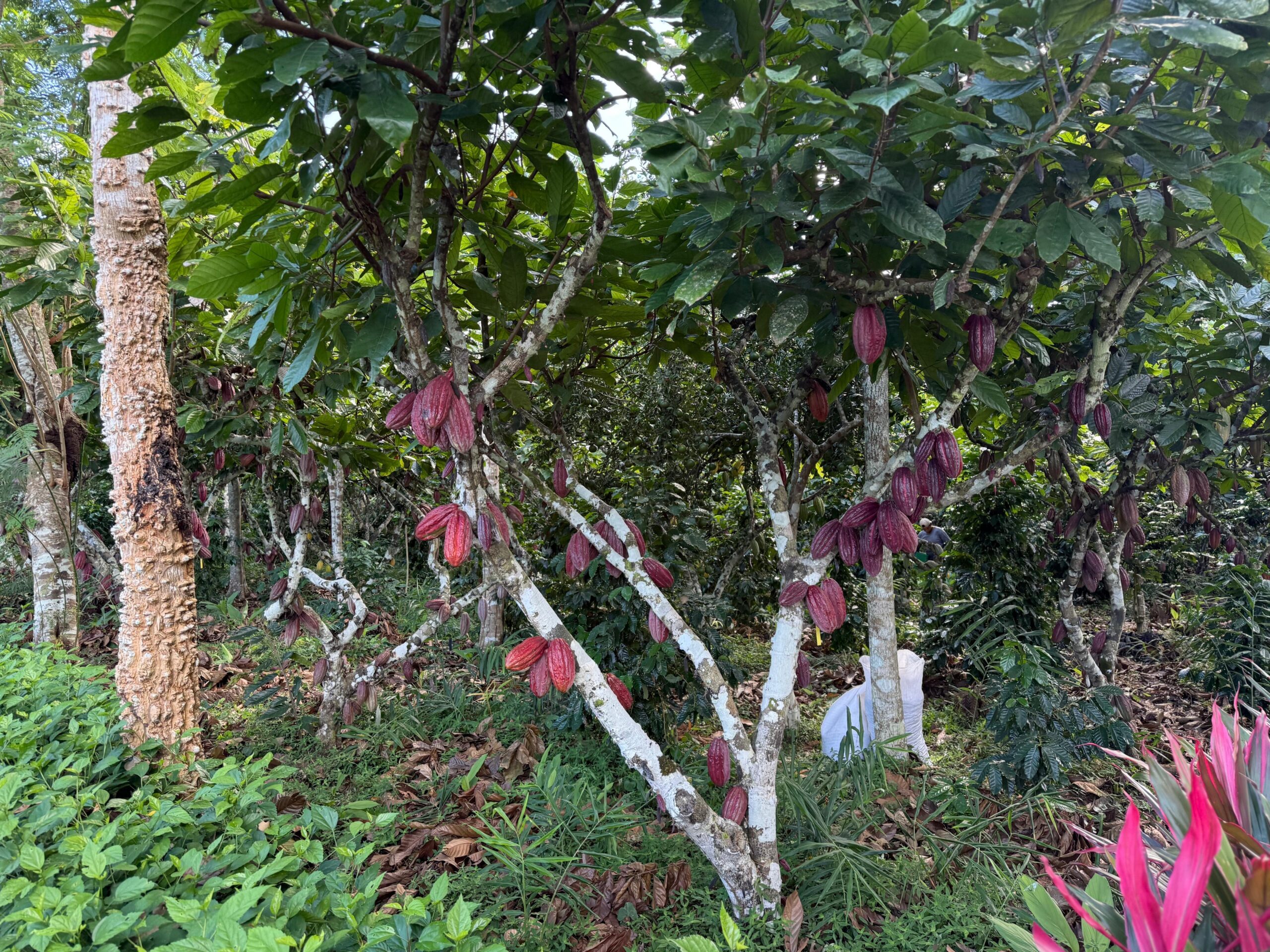
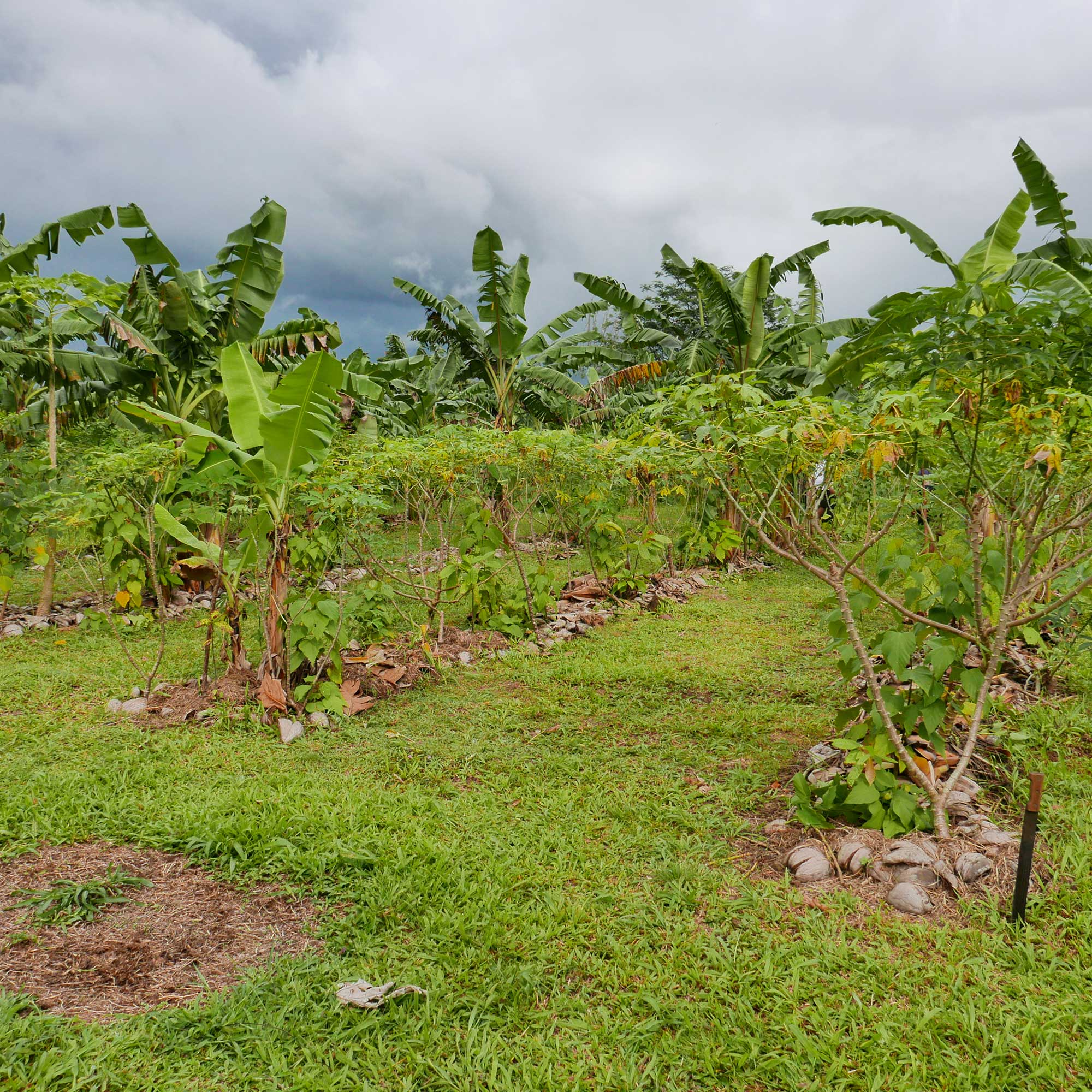
Dynamic Agroforestry (DAF) is an innovative approach to agriculture that integrates diverse plant species in a synergistic, stratified, diverse and dense manner, creating productive and resilient farming systems. In the...
DAF is a farming system with dense, diverse planting and regular pruning, designed to maximize biomass growth without external inputs. A 14-year field trial shows that DAF systems store 66...
Conventional agricultural practices typically focus on maximizing the yield of a single crop through monoculture. While this approach may offer short-term productivity, it demands high inputs such as intensive land...
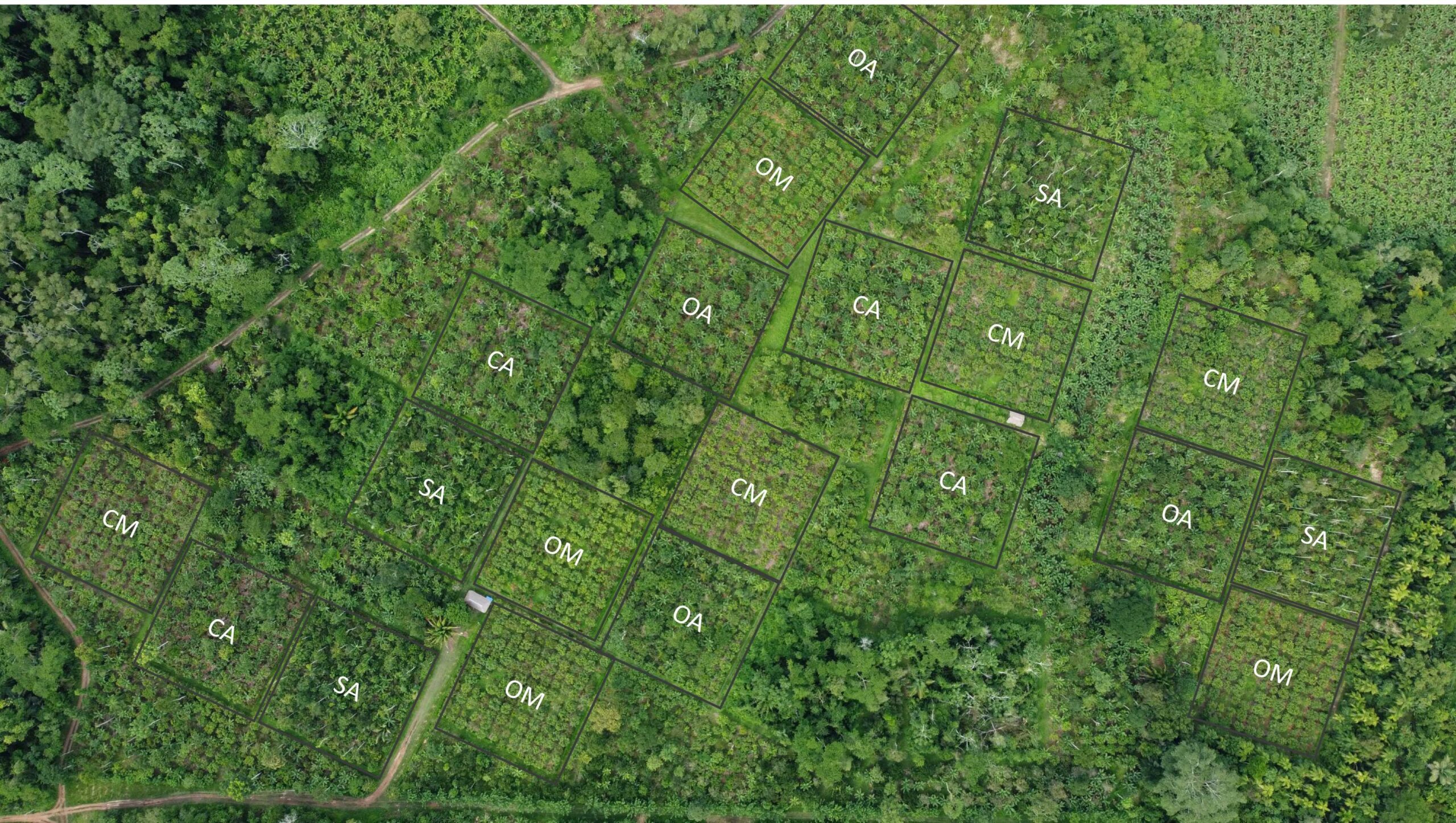
A recent study by Armengot et al. compared four cocoa production systems: agroforestry and monocultures, both under organic and conventional management, over the first five years after establishment. While monocultures...
Soil erosion threatens both agricultural productivity and environmental sustainability. For large landowners and agribusinesses, controlling erosion is crucial for maintaining soil health and ensuring long-term profitability. This article explores the...
Dynamic Agroforestry (DAF) offers a sustainable and profitable alternative to conventional commodity crop farming. By mimicking natural forest ecosystems and integrating a diverse range of plant species, it fosters resilient...
A recent study by Orozco-Aguilar et al. highlights the contributions of the CacaoFIT network—a collaborative effort among agronomists, researchers, and practitioners—to sustainable cocoa farming in Latin America and the Caribbean....
This study finds that using locally-selected cocoa clones can significantly boost cocoa yields. Conducted over five years in Bolivia, the research compared the performance of local clones against widely-used international...
This study examines how pruning shade trees impacts cocoa yields and income in agroforestry systems in Bolivia. Farmers who pruned their shade trees experienced yield increases from 430 kg/ha to...
A recent study conducted in the Alto Beni region of Bolivia compared different cocoa cultivation systems to assess their impact on carbon stocks and tree diversity. Researchers examined cocoa monocultures,...
This study compares cocoa monocultures and agroforestry systems under organic and conventional management over a decade in Bolivia. The findings reveal that while monocultures excel in cocoa-specific yields, agroforestry systems...
A long-term field trial conducted in Bolivia by Schneider et al. compared cocoa monocultures and agroforestry systems under both conventional and organic management. The study found that while conventional monocultures...
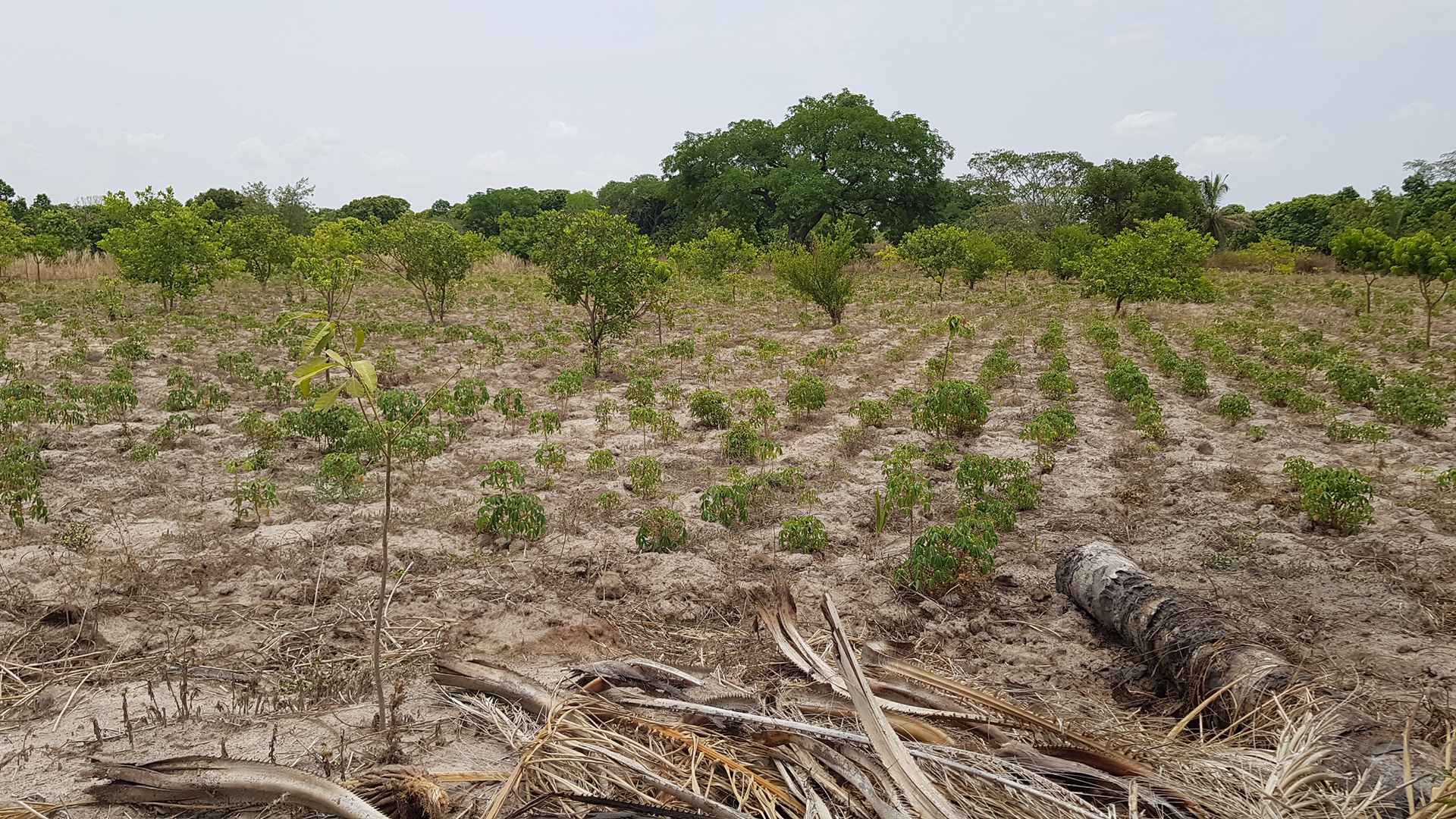
This study explores the differences between growing cocoa in monocultures and dynamic agroforestry systems (DAF), focusing on smallholder farmers in Bolivia and Côte d’Ivoire. Monoculture cocoa farming often leads to...
A recent study by Armengot et al. examines the environmental impacts of different cocoa production systems, focusing on smallholder contexts. The research compares four young cacao systems: conventional monoculture, organic...
The study investigated whether cacao agroforestry systems lead to higher pest and disease incidence compared to monocultures. Contrary to traditional beliefs, the study found that when good cultural management practices—such...
A recent study by Niether et al. presents a comprehensive meta-analysis comparing cocoa agroforestry systems with monocultures. Analyzing 52 articles, the research found that while cocoa yields in agroforestry systems...
Curious?
Get in touch with us to find out how we can work together!
To provide the best experiences, we use technologies like cookies to store and/or access device information. Consenting to these technologies will allow us to process data such as browsing behavior or unique IDs on this site. Not consenting or withdrawing consent, may adversely affect certain features and functions.
Functional
Always active
The technical storage or access is strictly necessary for the legitimate purpose of enabling the use of a specific service explicitly requested by the subscriber or user, or for the sole purpose of carrying out the transmission of a communication over an electronic communications network.
Preferences
The technical storage or access is necessary for the legitimate purpose of storing preferences that are not requested by the subscriber or user.
Statistics
The technical storage or access that is used exclusively for statistical purposes.The technical storage or access that is used exclusively for anonymous statistical purposes. Without a subpoena, voluntary compliance on the part of your Internet Service Provider, or additional records from a third party, information stored or retrieved for this purpose alone cannot usually be used to identify you.
Marketing
The technical storage or access is required to create user profiles to send advertising, or to track the user on a website or across several websites for similar marketing purposes.