Whether you are a farmer, a potential partner, an agricultural professional, or simply curious, this FAQ helps you understand our approach, our methods and how to get involved.
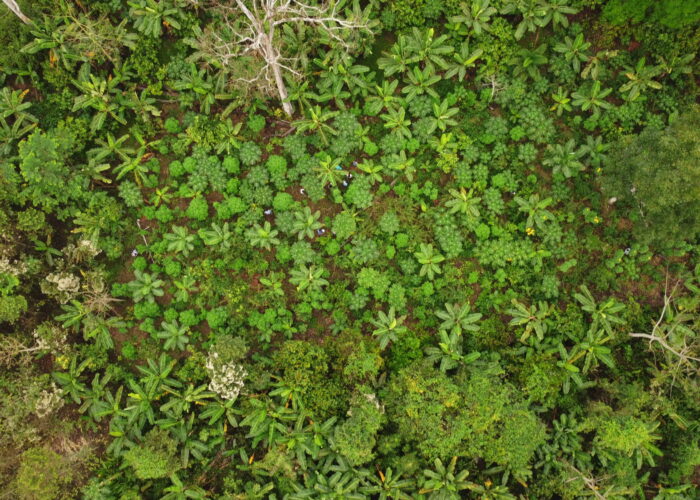
Dynamic Agroforestry (DAF) is a cultivation method that applies natural succession and plant stratification to support a main crop such as cacao, coffee, coconut, oil palm, or fruit trees. It creates diverse and productive systems that can be arranged flexibly — from mixed rows to alley cropping or mechanized layouts — while maintaining soil fertility, resilience, and long-term yields.
(See our upcoming article ‘What is Dynamic Agroforestry?’ to learn more about ECOTOP’s pioneering work in this field.)
Six guiding principles are applied in every ECOTOP project:
(Learn more in our detailed article on the 6 Principles of DAF – link to come.)
System design – Conventional agroforestry often means uniform rows of one or two tree species of the same age. DAF imitates natural succession with many species, layers, and ages interacting dynamically.
Beyond single yield – Conventional systems usually target one output (timber, fruit, fodder). DAF generates multiple products while creating synergies that enrich soils and sustain the system.
Adaptability – Conventional systems rely on fertile soils for good yields. DAF can also be established on degraded land by using pioneer species to restore fertility, water retention, and resilience.
Ecological functions – In DAF, plants are chosen not only for their crop value but also for their functions: nitrogen fixation, shading, pest control, biomass production, soil improvement, etc.
Weeds redefined – Where conventional systems see weeds as competitors, DAF treats them as potential allies that contribute biomass, recycle nutrients, loosen soil, and indicate ecosystem conditions.
External inputs – Conventional systems often depend on fertilizers and chemicals, while DAF is designed to function with no external inputs in most cases, regenerating its own fertility through biomass and diversity.
By producing large amounts of biomass and using it locally, DAF systems lock carbon into soils and vegetation for the long term. This reduces greenhouse gas emissions while regenerating ecosystems.
ECOTOP precisely measures the carbon sequestered in each project, enabling companies to credibly value their contribution to climate neutrality.
Click here to learn more about DAF’s potential for carbon removal and climate change mitigation.
The word “biomimicry” comes from the Greek bios (“life”) and mimesis (“imitation”). It means designing solutions inspired by nature’s strategies.
In DAF systems, biomimicry guides the planting design, species selection, and system management, thus recreating natural cycles of energy and nutrients. Overall, the goal of biomimicry is to restore a self-sustaining, resilient, and productive ecosystem over time.
Yes — and not only for a single product. DAF is designed to be regenerative, ecologically sound, and socio-economically beneficial.
Multiple outputs – DAF produces the main crop (cacao, coffee, cashew, coconut, oil palm, fruit trees, etc.) plus additional yields such as fruits, nuts, medicinal plants, and biomass.
Proven results – In a long-term cocoa trial in Alto Beni, Bolivia, recent years have shown yields of around 800 kg/ha without external inputs, with a clear upward trend, while soils increased in organic carbon and fertility. In Burkina Faso (2022–2024), cashew yields under DAF were on average +67% higher than common practice, and by year three reached +94% higher yields.
Resilience – Because DAF fosters diversity and habitats for beneficial insects, it creates natural pest and disease regulation, reducing risks and stabilizing production
DAF is a holistic farming approach that combines high agricultural productivity with ecosystem regeneration. Farmers and partners can expect results in both yields and environmental performance:
High yields – In a long-term cocoa trial in Alto Beni, Bolivia, recent years have shown yields of around 800 kg/ha, with a rising trend, achieved without fertilizers or chemicals. In Burkina Faso (2022–2024), cashew yields under DAF were on average +67% higher than common practice, and by year three reached +94% higher yields.
Carbon sequestration at forest level – Well-managed DAF systems can sequester as much, or even more, carbon than a secondary forest of the same age, while still producing crops.
Soil regeneration – Continuous biomass recycling increases soil organic carbon, nutrient availability, and long-term fertility.
Water and biodiversity gains – DAF systems improve water retention, support pollinators and wildlife, and create natural pest regulation.
Water efficiency – Improved water retention and optimized hydrological cycles.
Biodiversity gains – Increased presence of pollinators and wildlife, contributing to natural pest control and ecosystem balance.
Better land use efficiency – By combining crops in space and time, DAF increases productivity per hectare and labor efficiency compared to monocultures.
Yes. Dynamic Agroforestry (DAF) is designed to be adaptable and scalable — it applies the same principles of succession, stratification, and biomass recycling while adjusting the design to local soils, climates, and crops.
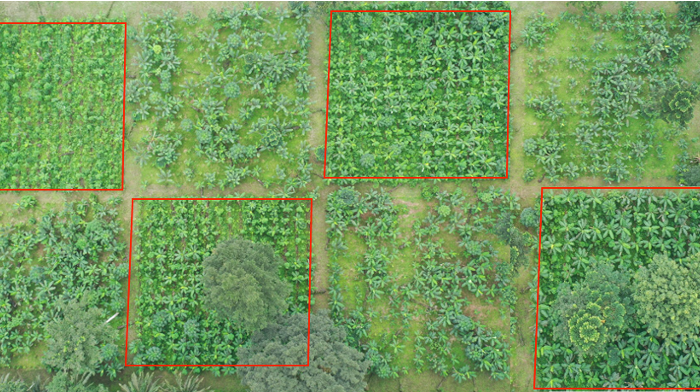
Not only forests – While DAF is great for cocoa and coffee, it does not have to look like a forest. Systems can be arranged in rows, alleys, or even mechanized layouts, depending on crop and context.
Diverse climates – DAF works in humid tropics (cocoa, coffee, coconut, oil palm), semi-arid regions (cashew in Burkina Faso, quinoa on the Altiplano in Bolivia), temperate zones (hazelnuts in mechanized systems in Europe), and even challenging soils (DAF established on recent lava soils in Samoa).
Across scales – From smallholder plots to large plantations, DAF has been successfully implemented on four continents, proving its flexibility.
In short: DAF can be applied anywhere — from tropical rainforest to dry savanna, from annual crops to perennial orchards — always adapting to local realities while delivering productivity and regeneration.
Inspired by nature’s diversity, our team brings together a wide range of skills, backgrounds, and experiences from all over the world. From Field Technicians to Project Coordinators and International Consultants, we work simultaneously to plan, implement, and monitor DAF projects across different climates, cultural contexts, and local goals.
Our collaborative approach ensures that each project is both scientifically sound and locally adapted, combining hands-on expertise with holistic planning.
Want to know more? Meet our founders, experts and technicians here.
ECOTOP’s story began in western Bolivia in the 1980s, when Dr. Joachim Milz pioneered the first organic cocoa supply chain from Bolivia to Germany. Aiming to make agriculture not just productive but also regenerative, a key encounter with Ernst Götsch, founder of syntropic agroforestry, inspired him to look at how nature itself produces food, builds biomass and regenerates over time.
Together with other Bolivian farmers, Joachim began redesigning agricultural systems by following natural succession dynamics, laying the foundations of what would later become Dynamic Agroforestry. By the early 2000s, this knowledge was formalized with the creation of ECOTOP, aiming to produce without external inputs while regenerating and enriching ecosystems.
Discover our story to explore key moments of DAF’s evolution in Bolivia and around the world.
We work with farmers, companies, public authorities, NGOs and international organisations looking to restore land, increase yields, strengthen ecosystems, improve environmental impact, or offset carbon emissions.
Based on an individual diagnostic of your specific production system, ECOTOP designs alternatives and offers training in management practices of dynamic agroforestry systems.
We provide training and strategies to both large scale farmers e.g. like this one (link to come), and smallholder farmers, as in this project, with technical staff who are all experienced farmers and who have the required expertise to adapt DAF to the context of your farm.
We also focus on knowledge dissemination and train local “lighthouse” farmers who pass on their experience in field courses and farmer-to-farmer exchanges.
You can contact us for a personalised diagnosis, join our training sessions or become a partner in a restoration project.
ECOTOP works with private companies, including large enterprises in agriculture and forestry, as well as those in the food industry who import and process agricultural products. We design and implement projects that align ecological, social, and business goals, proving that sustainability and profitability go hand in hand.
ECOTOP provides custom solutions designed for unique needs and streamlines carbon insetting by following certifiers’ methodologies in a cost-effective process. We have partnerships with major companies including Barry Callebaut, Dr. Bronner’s, and Coop Switzerland.
ECOTOP works with large-scale farmers and landowners who aim to diversify their yields and adapt their cultivation methods, achieving both economic and environmental benefits. We provide tailored consultancy, training programmes, and technical support.
ECOTOP collaborates with governmental organizations including the European Union, the Deutsche Gesellschaft für Internationale Zusammenarbeit (GIZ), and the Inter-American Foundation (IAF).
The Ghana Cocoa Board has recognized DAF’s potential, and the Cocoa Research Institute of Ghana has established research plots for comparative studies.
ECOTOP’s systems require public policies supporting agricultural research and participative extension services, where states and donors play a key role.
For any collaboration opportunities, we encourage interested parties to get in touch to explore working together.
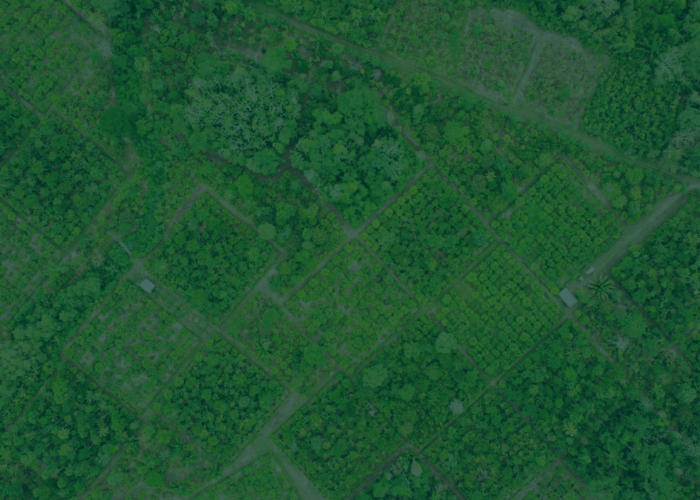
With our DAF Tracker tool, you can view your project map, assess species diversity, monitor soil cover, and track other key indicators to monitor the evolution of your project in real time.
Click here to learn more about the DAF Tracker tool.
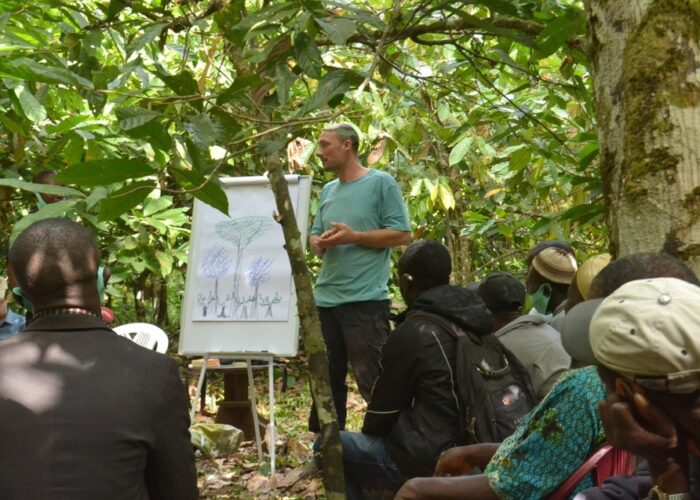
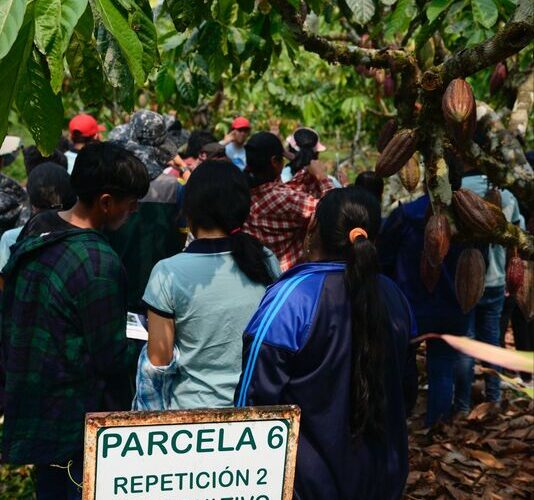
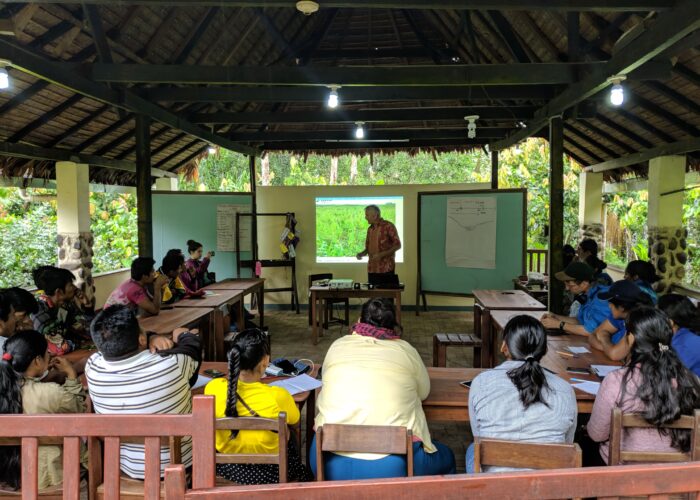
Yes. We offer workshops and courses several times a year in Bolivia that combine understanding the theory with real learning through hands-on practice. Need a course or a training somewhere else? Get in touch with us!
Our programs cover the core principles of DAF while immersing participants directly in agroforestry systems. From understanding natural succession and monitoring ecosystem evolution, to exploring economic dynamics, carbon sequestration, and soil fertility, we ensure a holistic and practical approach.
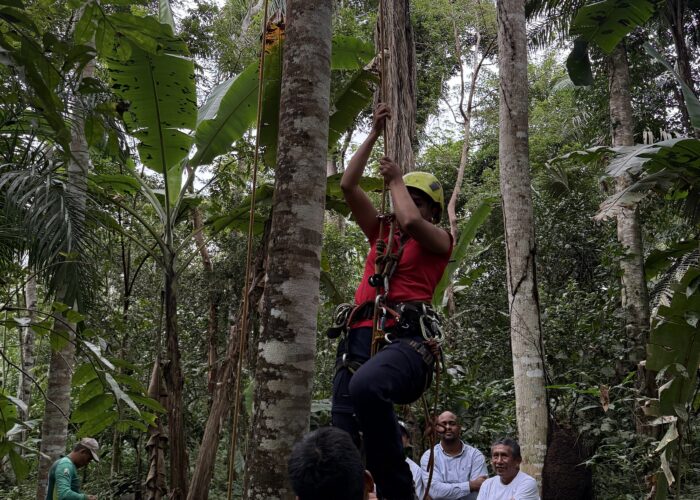
Participants gain not only a deeper understanding of DAF system design and species selection, but also practical skills in biomass management and pruning. In addition, field visits and exchanges with local producers provide a direct link between theory and real-world practice.
Interested? Explore our past courses and workshops and stay tuned for upcoming opportunities!
A typical DAF project with ECOTOP usually spans around four years, including on-site analysis, planning, implementation, and the first monitoring phases.