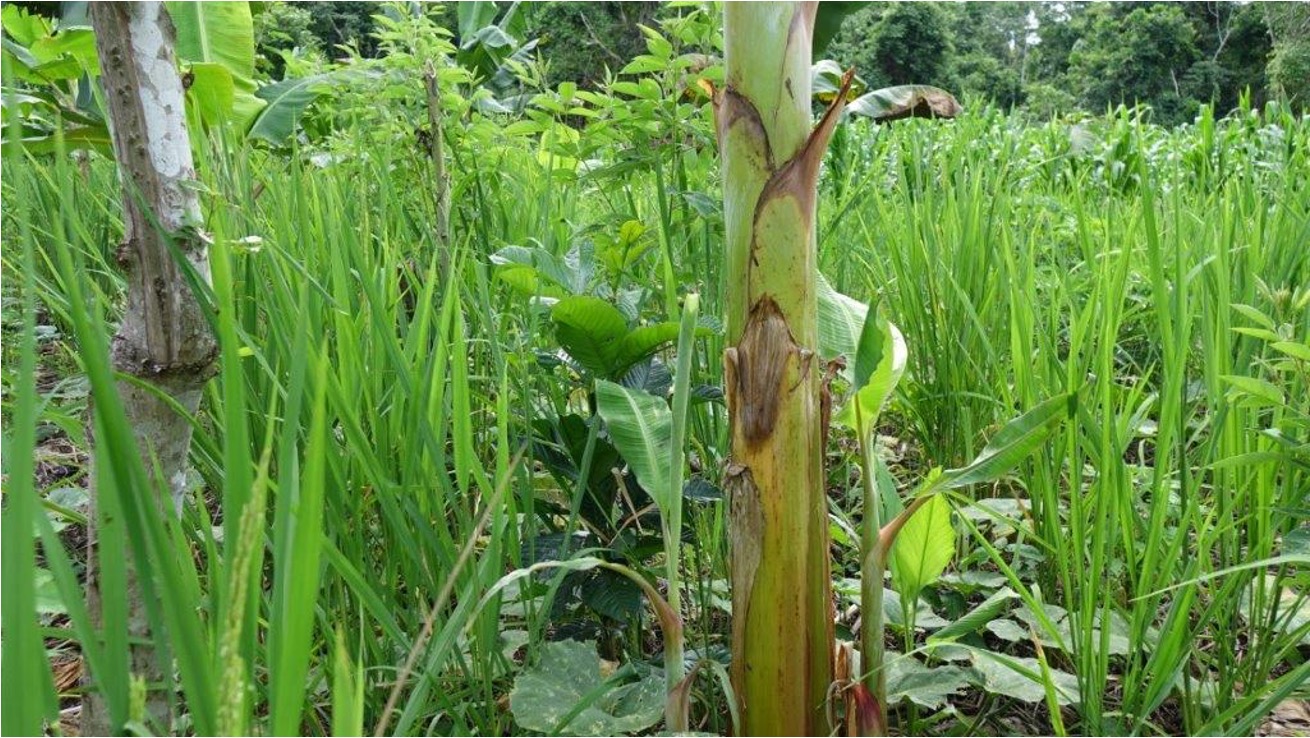
Cultivos con los que trabajamos
Oryza, Zea, Phaseolus, Manihot
Food from the first months, grown without fire, on the same plots where the trees of a Dynamic Agroforestry system are getting started.
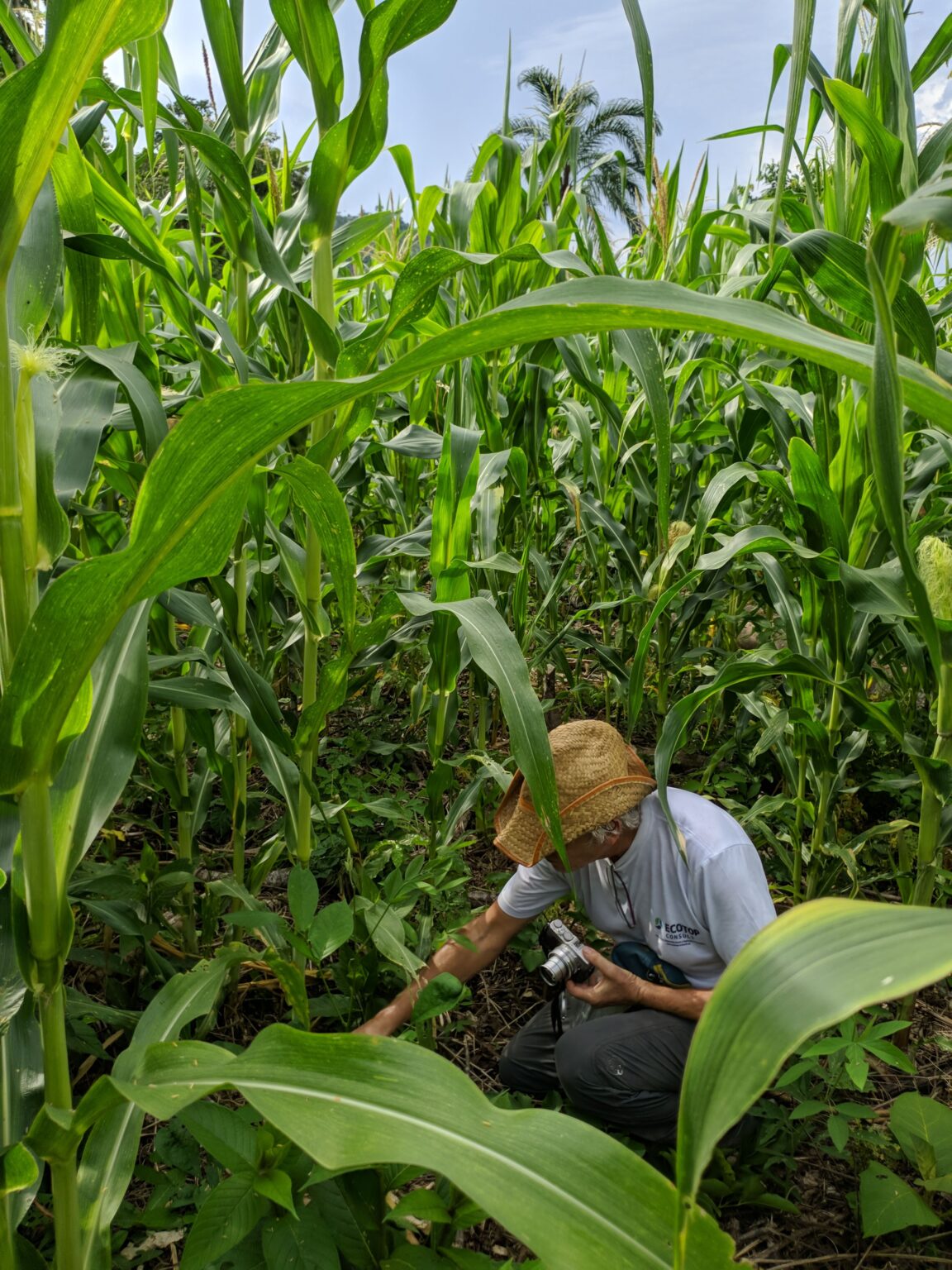
In much of the tropics, rice, maize and beans are still grown by slash-and-burn. Forest or fallow is cleared and burned, cropped for a year or two and then left. Yields fall after the first harvest, and in dry years the fires get out of control.
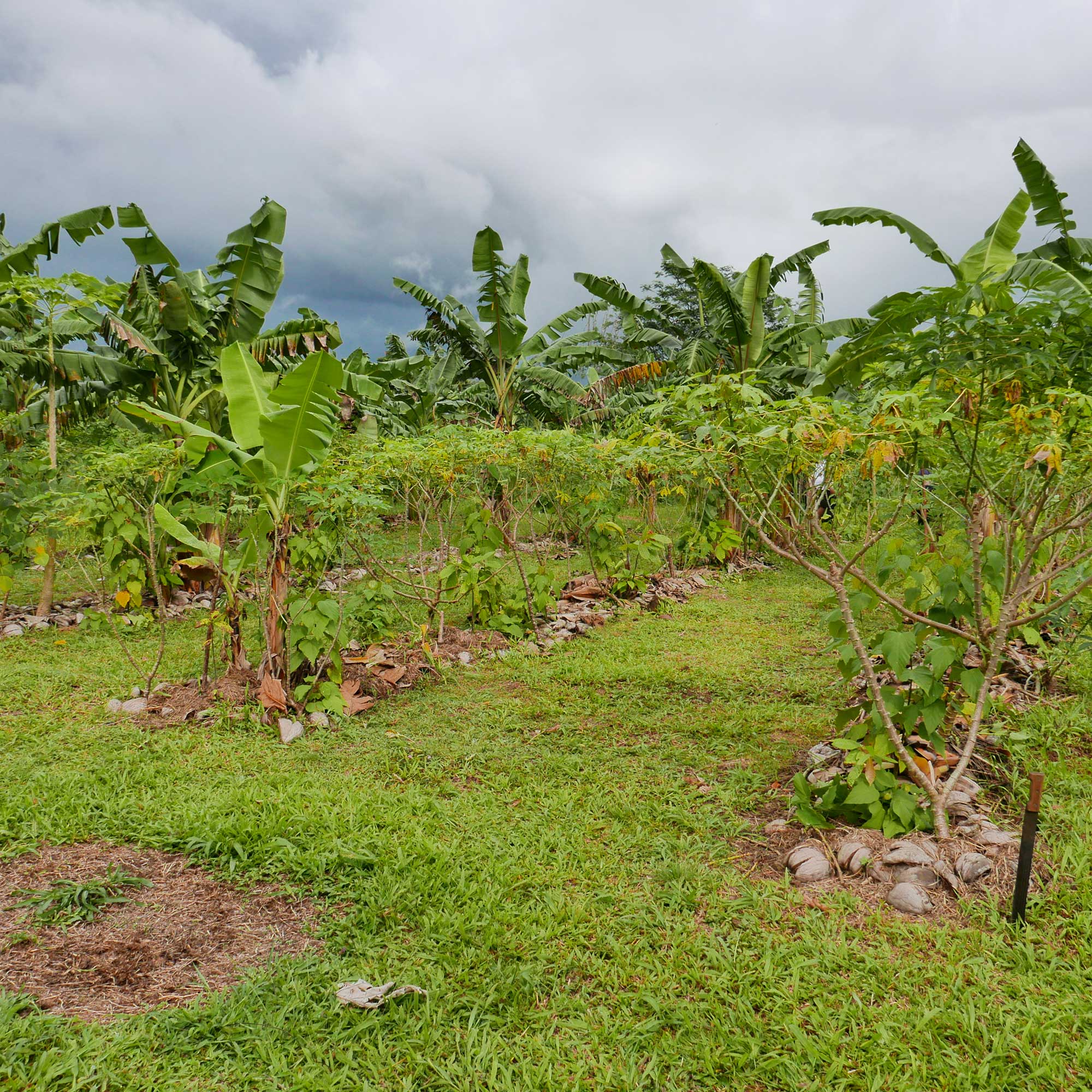
In Dynamic Agroforestry the vegetation is cut and laid on the ground instead of burned. Maize, rice, beans and cassava come up through the mulch in the first months, while bananas, fruit and timber trees take over in the years that follow. Families eat and sell from the plot from the first season.
On fields close to the house, where a family wants to keep growing food every year, rows of trees are pruned hard before each sowing. Their branches cover the soil, maize, beans or cassava grow in the light between the rows, and the trees resprout to grow the mulch for the next cycle. In Ghana’s Sankofa project, farmers began planting cocoa into these food plots in 2023, so the project decided to merge the two designs.
Nuestro enfoque
A programme built with you, from the first field visit to whole communities farming without fire, with local people trained to run it.
Fundación ECOTOP has grown rice and maize without burning in Alto Beni, Bolivia, for more than a decade. On fallow land, maize is sown together with canavalia, a cover crop that closes over the soil and keeps weeds down. After the maize harvest the canavalia is cut, and rice is sown straight into the mulch.
In ECOTOP trials from 2014 to 2018, rice grown without burning averaged 1,560 kg of dried, peeled rice per hectare, with no external inputs and less weeding. Slash-and-burn rice in the region rarely passes 1,000 kg in the first year and drops after that. Fundación ECOTOP also works with the municipalities of Palos Blancos and Alto Beni on local rules that restrict burning.
La diferencia
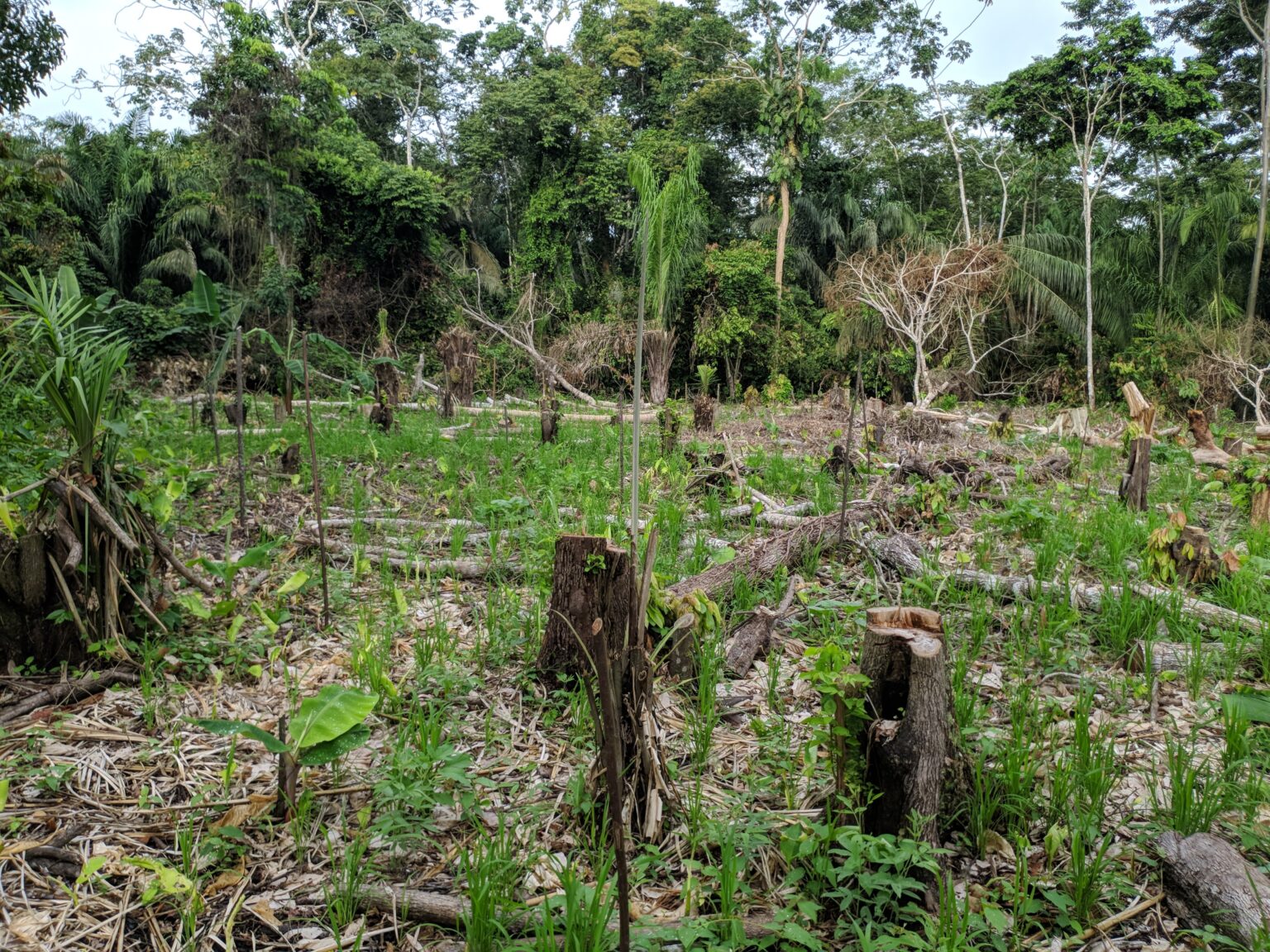
Cut vegetation stays on the ground as mulch and feeds the soil instead of going up in smoke.
Without burning there is no fire to escape into forest and fallow, a growing risk after recent droughts.
Beans, maize, rice and cassava are harvested within months, long before the trees bear.
The annual crops share the plot with bananas, fruit and timber trees, which take over as the system grows.
Socios
Started in 2016 with lead farmers testing planting without burning. Maize, cowpea, cassava, yam and plantain grow in the first years of the cocoa plots.
Field newsThree half-hectare learning plots with the Asoarhuaco association in the Sierra Nevada de Santa Marta, with maize, beans, cassava and plantain sown into mulch; cocoa follows in the next phase.
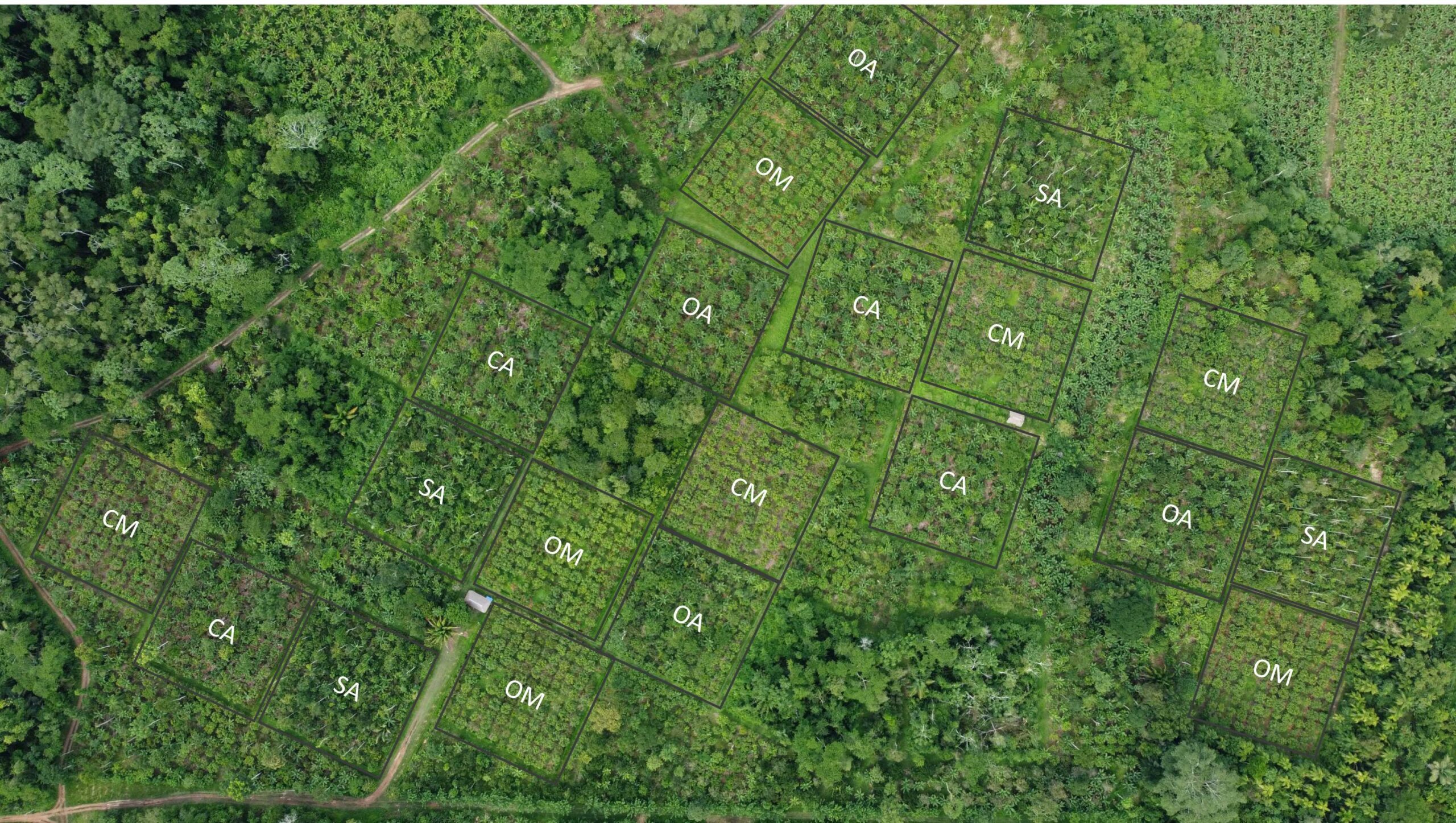
InvestigaciónComparing agroforestry and monoculture side by side since 2008. The plots started with one season of maize and canavalia before the cocoa went in.
Pruebas
 Investigación · 10 min
Un ensayo a largo plazo demuestra que la agrosilvicultura puede alcanzar los mismos rendimientos que los sistemas convencionales, pero con una resiliencia mucho mayor.
 Artículo · 6 min
Por qué los sistemas diversificados y gestionados ofrecen un mayor rendimiento que la maximización del monocultivo.
 Artículo · 6 min
Cómo la agroforestería dinámica almacena carbono y regenera los paisajes.
Nuestros servicios
Desde la primera evaluación hasta el traspaso de responsabilidades al equipo local.
Más información →Entrenadores que cultivan DAF por su cuenta, con un seguimiento de la parcela hasta que los suelos y los rendimientos lo demuestren.
Más información →Carbono medido sobre el terreno, listo para la certificación.
Más información →Datos de campo, mapas de parcelas y paneles de control. EUDR con los mismos datos.
Más información →Dos ensayos a largo plazo, cuyos resultados han sido revisados por expertos.
Más información →ECOTOP helps cooperatives, NGOs and companies bring food crops into Dynamic Agroforestry, without fire. Let’s talk about your project.
Habla con nuestro equipo