We run scientific research to test our own method. With partners such as FiBL (Switzerland) and the Cocoa Research Institute of Ghana (CRIG), we compare Dynamic Agroforestry with conventional cocoa and other farming systems in long-term field trials.
What we research
Side-by-side trials of DAF against conventional cocoa and other systems: yields, income and how plots perform over the long run.
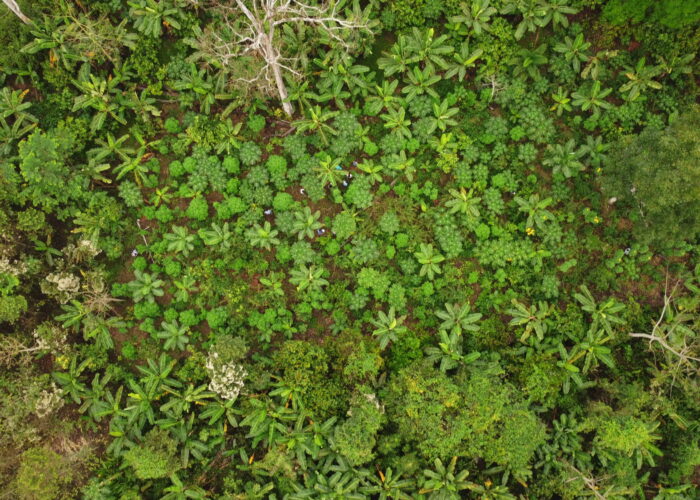
Measuring biomass carbon in DAF plots and developing methodologies for carbon removal and Scope 3 insetting.
Soil health, nutrient cycling and biodiversity in DAF plots, compared with monocultures on the same sites.
Research projects
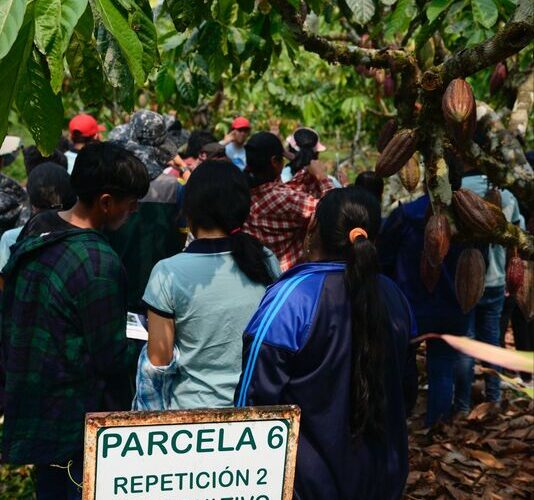
At the Sara Ana research station in Alto Beni, Bolivia, DAF cocoa has been compared with conventional and monoculture systems on the same site for 18 years, as part of the SysCom programme.
FiBL holds the scientific lead, which keeps the results independent. The findings are peer-reviewed, most recently Krause et al. (2025) in Agriculture, Ecosystems & Environment.
Carbon sequestration
+10.4t CO2/ha/yr
more than conventional monoculture
Biomass carbon after 14 years, averaged annually. Krause et al. (2025), Agriculture, Ecosystems & Environment — SysCom Bolivia.
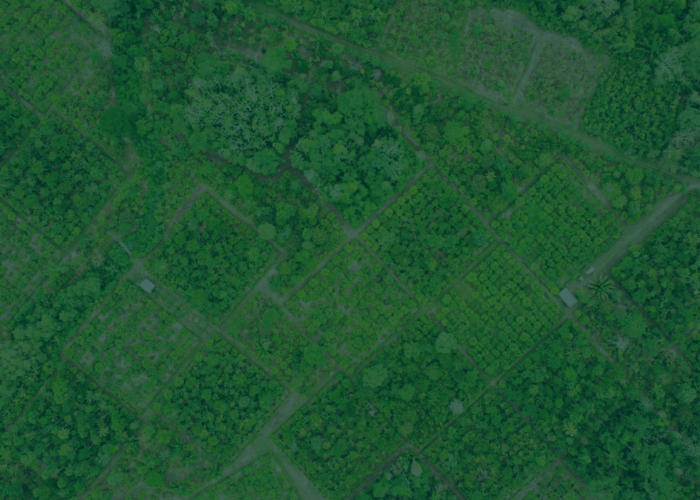
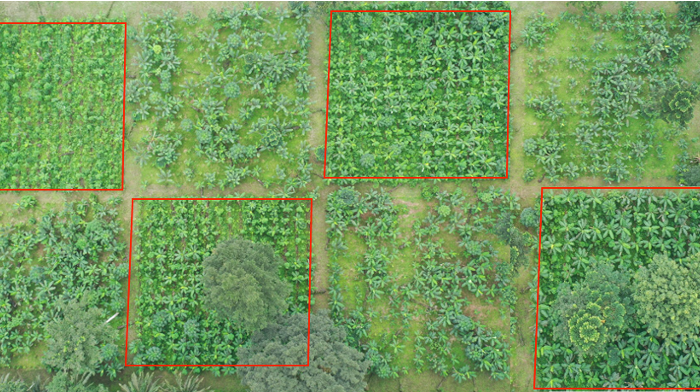
At the Cocoa Research Institute of Ghana (CRIG) in New Tafo, a trial running from 2022 to 2027 compares DAF grown without external inputs with CRIG’s conventional monocultures, which receive fertilisers and plant protection. Four plots of 2,500 m² give four replicates.
CRIG collects the data and runs the statistical evaluation. ECOTOP designed the DAF plots and backstops their management.
Mid-term observations (2025)
Interim field observations. Full results will be published at the end of the trial.
How we work
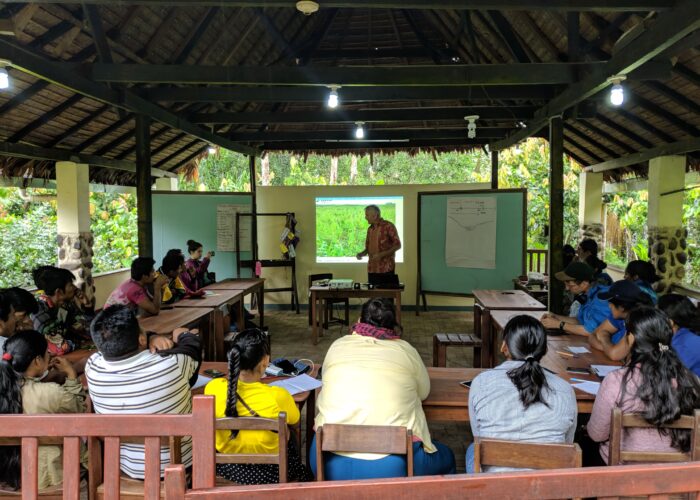
Trials run with academic institutions, NGOs and companies, so the questions come from practice and the answers go back to it.
Field trials and demonstration sites ground the research in real conditions, with results farmers, businesses and policymakers can act on.
FiBL holds the scientific lead at SysCom. That limits bias and keeps the work to a high scientific standard.
Findings are shared through open-access publications, workshops and knowledge exchange programmes.
Our services
From the first assessment to handover to local teams.
Learn more →20 years of practical experience, delivered as participatory training.
Learn more →Field data, dashboards and EUDR due diligence on one tool.
Learn more →Carbon insetting following certifier methodologies and third-party audits.
Learn more →