Pflanzen, mit denen wir arbeiten
Citrus spp.
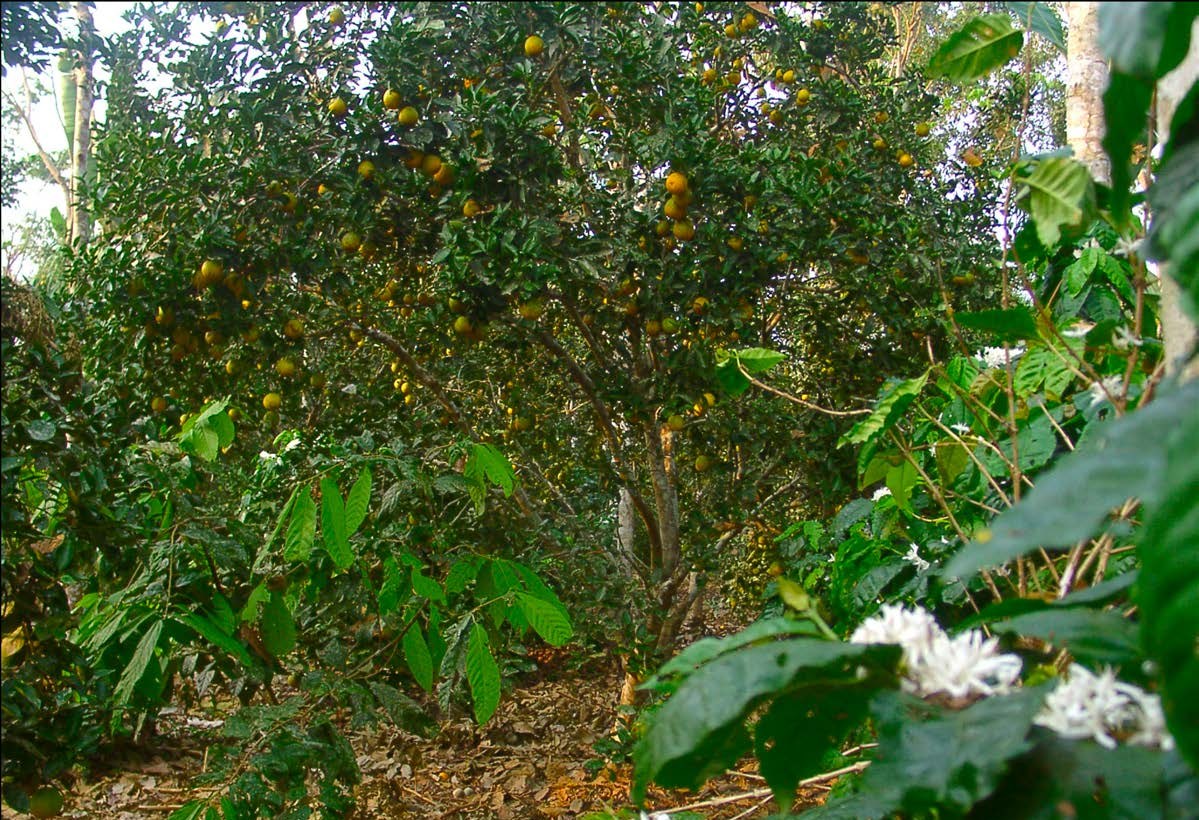
Oranges and other citrus grown in the middle of a planted forest, with healthier trees and soil that gains organic matter year after year.
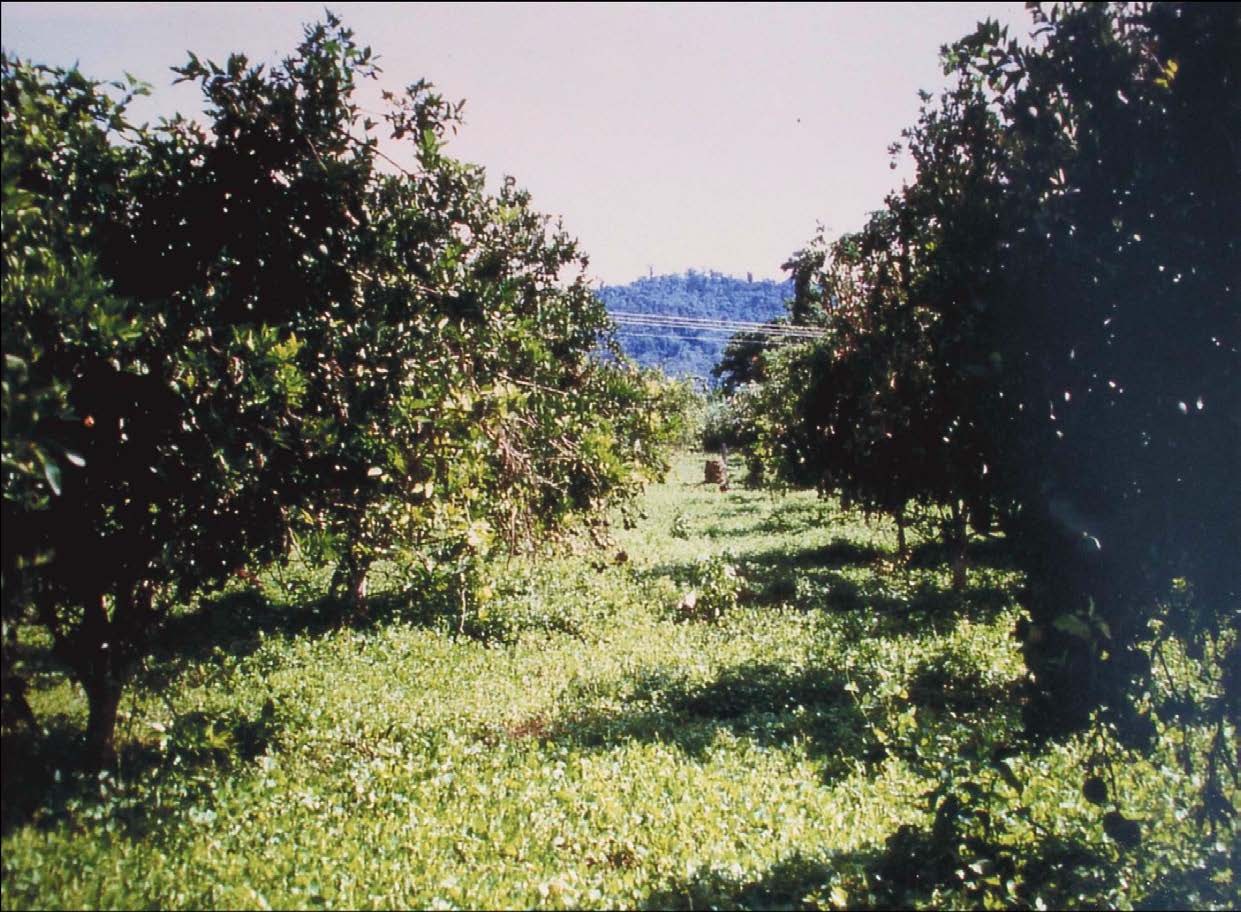
Citrus is usually grown as an open orchard: one variety in rows, bare or mown ground between the trees, and often a spray programme against pests and fungi. As the trees age, disease pressure builds up and the soil loses organic matter.
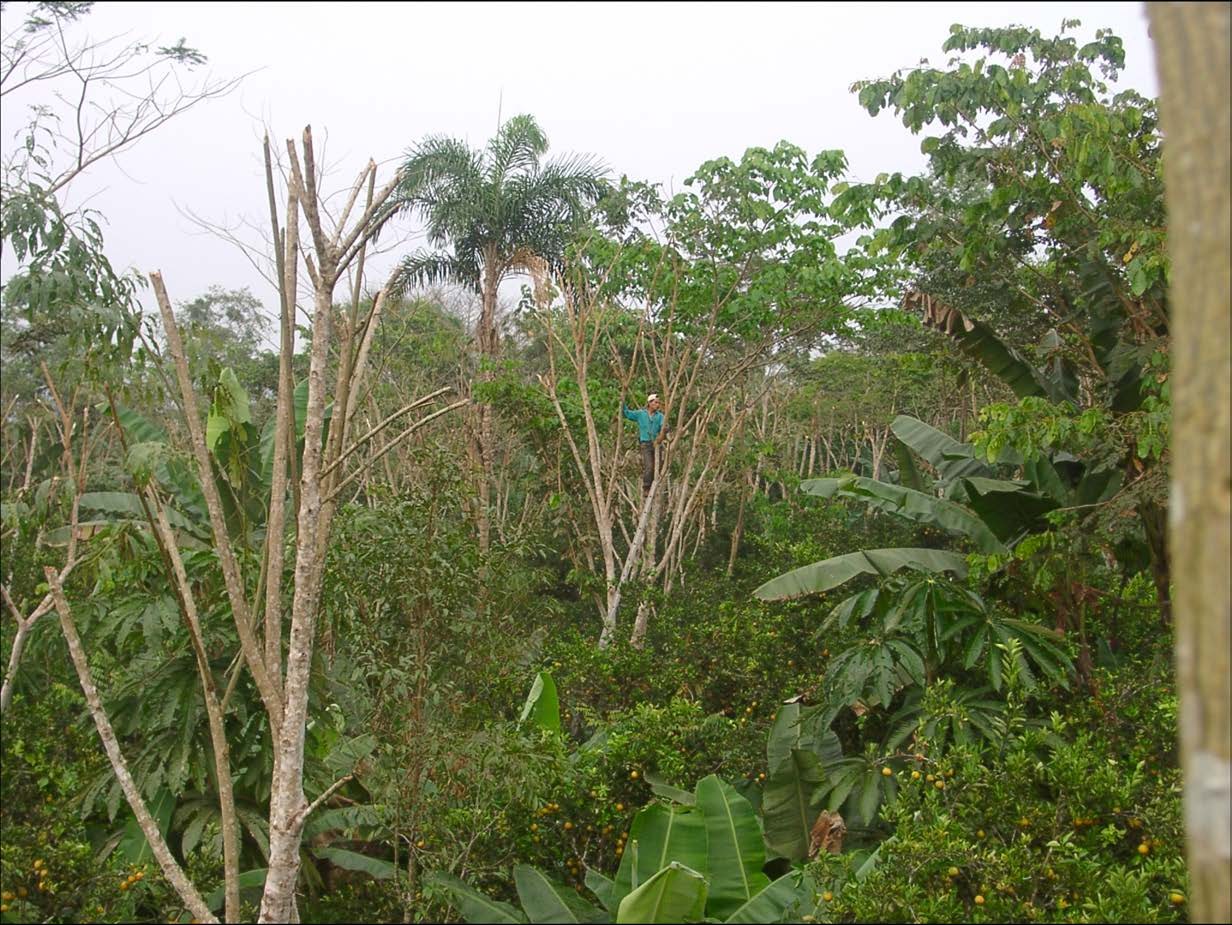
Dynamic Agroforestry puts citrus into a planted forest. Citrus belongs to the middle stratum: timber trees that drop their leaves in the dry season grow above it, and bananas, biomass trees and food crops fill the space below.
Citrus needs light to flower. About three months before flowering, the shade trees around it are cut back hard, so light reaches the crowns and induces flowering. The cut branches stay on the ground as mulch and feed the soil.
Unser Ansatz
A programme built with you, from the first orchard visit to whole farms managed this way, with local people trained to run it.
In 1989 Joachim Milz, ECOTOP’s founder, planted about one hectare of Valencia oranges as a monoculture on his farm in Sapecho, Alto Beni, Bolivia. Six years later the trees were suffering from fungal disease and mistletoe, and branches were dying back.
In 1996 he sowed tree seeds of every stratum between the rows, together with palms and bananas, and added cocoa and coffee a few years later. The orchard recovered. Compared with neighbouring monocultures it had fewer fruit flies, less fruit drop and a higher yield per tree, with the same sugar content in the fruit, and its soil held four to ten times more humus. Cocoa and coffee grow under the oranges as second crops, and in 2025 the original orange trees, then over 35 years old, were still bearing.

In Ghana, ECOTOP works on bitter orange orchards with declining productivity. The trees were not old, but yields had fallen far below their potential. The oranges are grown for Jägermeister, and the work is done with the organic grower Bothapraku and with FiBL.
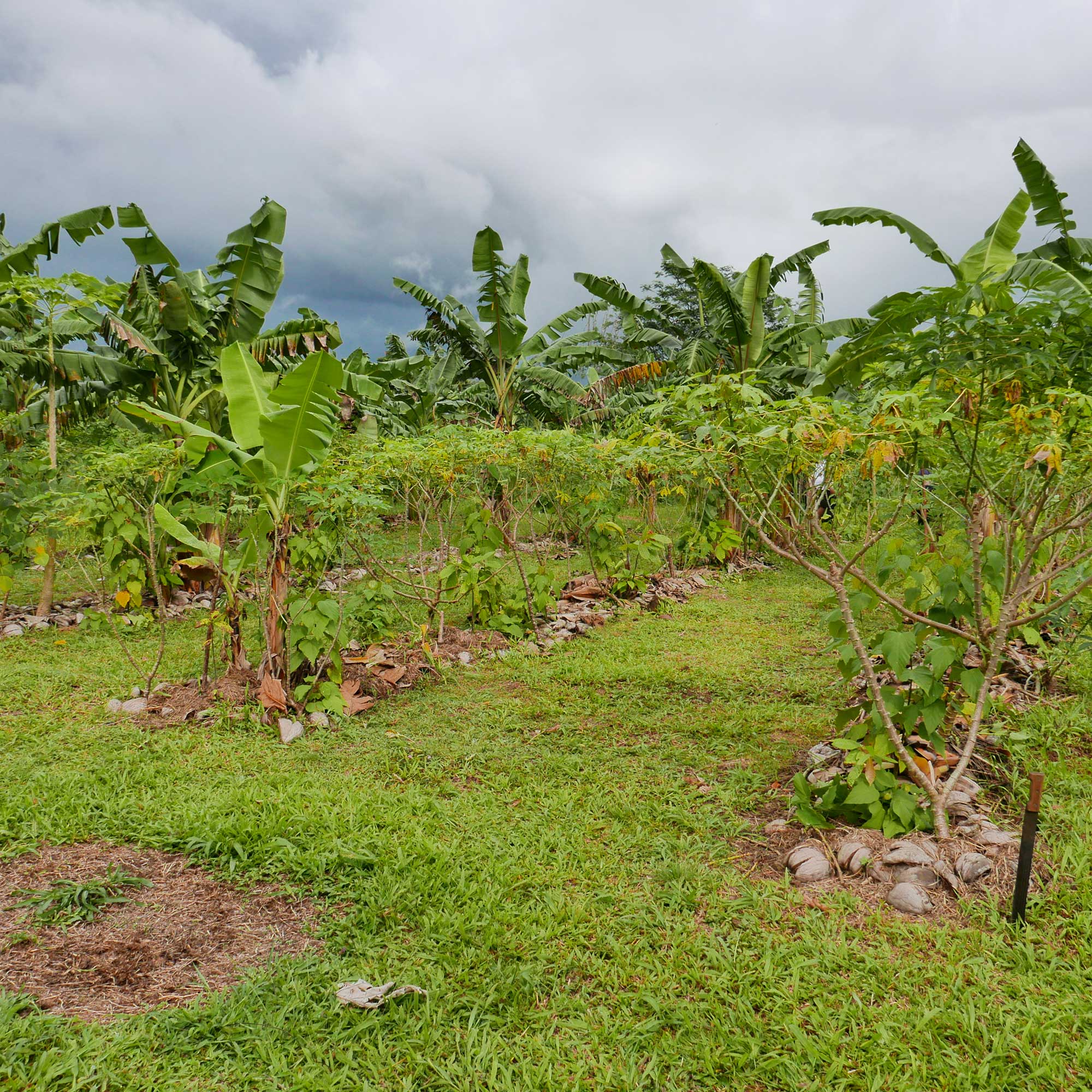
We used the DAF island approach. Instead of replanting the orchard, small clusters of trees, bananas, cassava and biomass plants such as Tithonia are planted into its gaps. Their pruned branches and leaves cover and feed the soil, so soil fertility came back within a short time and the orange trees now yield more, without ever stopping production.
Farm workers and technical staff are trained in pruning, biomass management and agroforestry design.
Der Unterschied
Leaves and pruned branches turn into humus. On the Alto Beni plot the soil holds four to ten times more than in nearby orchards.
As the system grew, fungal disease and mistletoe disappeared from the Alto Beni orchard, and it has fewer fruit flies than neighbouring monocultures.
Timber, cocoa, bananas and food crops grow with the citrus, so a weak fruit year does not mean a weak farm year.
DAF islands, small clusters of trees, bananas and biomass plants, bring the system into an existing orchard gap by gap while the citrus keeps producing.
Partner

DAF islands in orange orchards with Bothapraku and FiBL, commissioned by Jägermeister (2022–2025), with training for farm workers and technical staff.
 Partner
Ghanaian grower and exporter of organic oranges, lemons and limes, and host of the DAF islands in its orchards.
 Partner
Works with ECOTOP on agroforestry where its raw materials grow, from oranges in Ghana to star anise in Vietnam.
Beweise
 Forschung · 10 Min.
Eine Langzeitstudie zeigt, dass die Agroforstwirtschaft mit herkömmlichen Erträgen mithalten kann und dabei eine weitaus größere Widerstandsfähigkeit aufweist.
 Artikel · 6 Min.
Warum vielfältige, bewirtschaftete Systeme ertragreicher sind als die Maximierung durch Monokultur.
 Artikel · 6 Min.
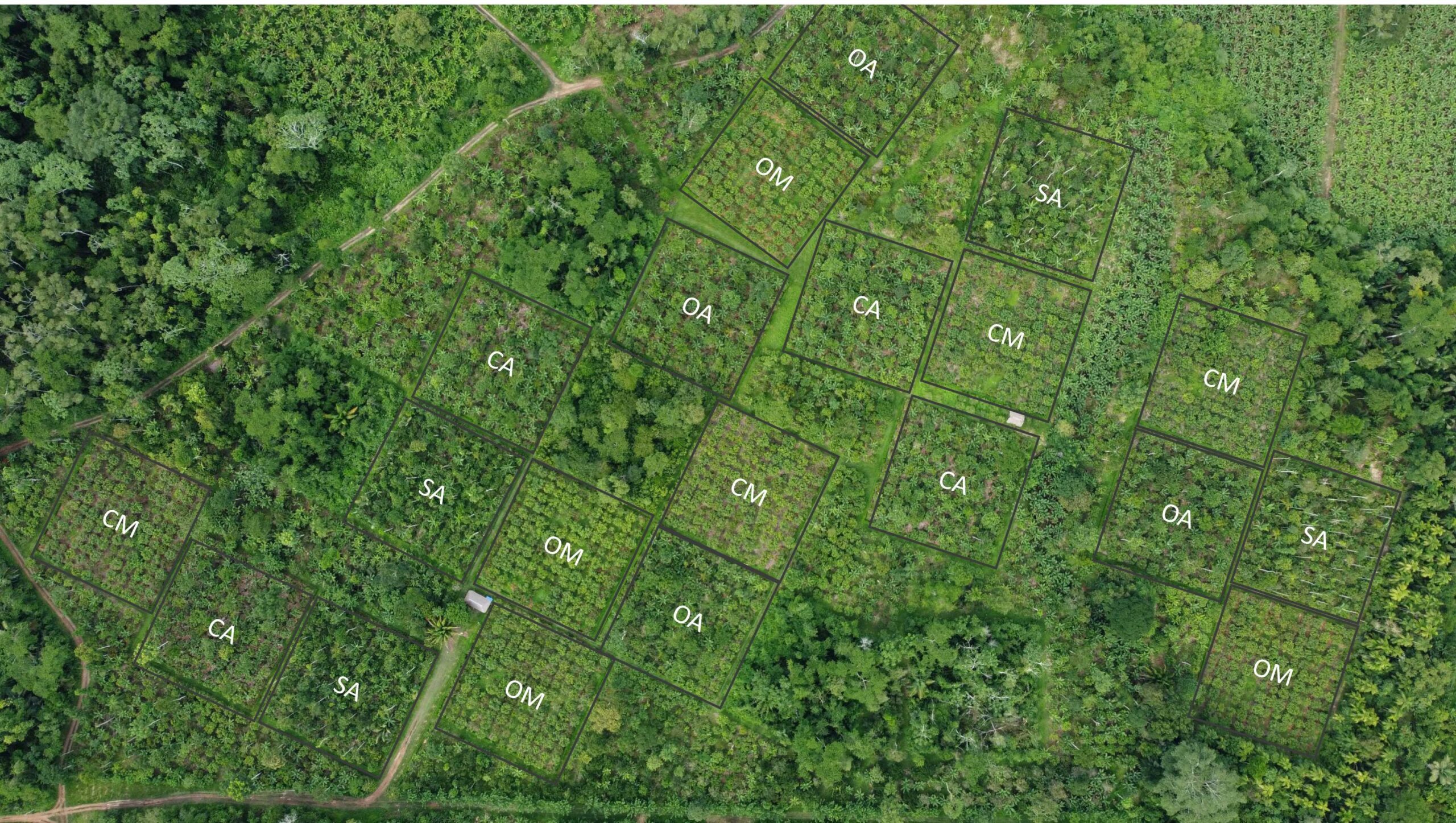
Wie die dynamische Agroforstwirtschaft Kohlenstoff bindet und Landschaften wiederherstellt.
Unsere Dienstleistungen
Von der ersten Begutachtung bis zur Übergabe an ein Team vor Ort.
Mehr erfahren →Ausbilder, die selbst DAF anbauen und die Parzelle so lange betreuen, bis sich dies in den Böden und Erträgen widerspiegelt.
Mehr erfahren →Vor Ort gemessener Kohlenstoff, zertifizierungsfähig.
Mehr erfahren →Felddaten, Parzellenkarten und Dashboards. EUDR auf Basis derselben Daten.
Mehr erfahren →Zwei Langzeitstudien, von Fachkollegen begutachtete Ergebnisse.
Mehr erfahren →ECOTOP helps producers and buyers move citrus out of open orchards and into Dynamic Agroforestry. Let’s talk about your citrus.
Sprechen Sie mit unserem Team